How much does a home battery cost in California?
Current installed prices by capacity, what happened to the federal credit and SGIP, and why a battery is a payback decision on SCE but a backup decision on LADWP.
Short answer
A home battery in California costs about $1,037 per kWh installed, roughly $13,500 for a typical 13 kWh system before incentives, according to EnergySage’s California data updated October 4, 2026. Homeowners who buy a battery installed after December 31, 2025 no longer get the 30% federal credit, and the state’s SGIP rebate is down to a wait-listed, income-qualified budget. Whether a battery pays depends mostly on your utility: under SCE’s NEM 3.0 it shifts low-value daytime exports into the evening; on LADWP it is mainly about backup.
On this page
What a home battery costs
Batteries are priced by usable energy capacity in kilowatt-hours. EnergySage’s California marketplace data, updated October 4, 2026, gives these installed prices before incentives. They are market figures, not a Current Energy quote.
| Capacity | Typical installed cost | Roughly equivalent to |
|---|---|---|
| 10 kWh | $10,370 | A small single battery |
| 13 kWh | $13,482 (range $11,460–$15,504) | One Tesla Powerwall-class unit |
| 20 kWh | $20,741 | One large or two small units |
| 26 kWh | $26,963 | Two Powerwall-class units |
EnergySage lists combined solar-plus-storage systems in California from about $17,690 to $51,363. Lawrence Berkeley National Laboratory’s 2025 data update found that paired residential solar-plus-storage systems installed in 2024 had a median cash price $1.7 per watt of solar higher than solar alone, and that the median residential battery was 13.5 kWh, the size of a single Powerwall, with most between 10 and 20 kWh. California makes up about 90% of LBNL’s paired-system pricing data, so those figures are close to a California benchmark.
What changed for incentives
No 25D credit for buyers
The IRS says the residential clean energy credit does not apply to expenditures made after December 31, 2025. An expenditure is made when installation is completed, so a battery finished in 2026 gets no homeowner credit.
Third-party-owned storage differs
A battery owned by a leasing company or other business may qualify for the Section 48E business credit. Energy storage is not subject to the December 31, 2027 placed-in-service cutoff that now applies to new solar.
SGIP is wait-listed
Only the income-qualified equity budget is accepting new applications, and it is fully reserved. Details below.
Utility programs vary
LADWP and SCE each have their own rules for how batteries interact with solar billing. See the comparison below.
Not tax or legal advice
Current Energy is a licensed contractor. This page summarises publicly available rules as they stood on October 8, 2026 and is not tax, legal or financial advice. Programs change. Confirm anything that affects a real decision with your CPA, tax counsel or the program administrator.
SGIP in 2026
The Self-Generation Incentive Program is California’s main battery incentive. Its status has changed sharply:
- As of December 31, 2025, SGIP accepts new applications only to the Residential Solar and Storage Equity (RSSE) budget funded under AB 209, and that budget is fully reserved. New applications go on a waitlist funded by attrition.
- RSSE incentives are listed at $1.10 per Wh of storage and $3.10 per W of paired solar, for income-qualified households.
- LADWP’s SGIP page adds that a CPUC ruling of February 20, 2026 responded to high RSSE project costs with additional cost verification, that waitlisted applications have no guarantee of funding, and that a lottery notification is not an award. Single-family eligibility is income at or below 80% of area median income. Applications are made through selfgenca.com.
Our older SGIP battery rebate answer explains how the program has worked historically; for budgeting today, assume no SGIP unless you qualify for the equity budget and are funded off the waitlist.
When a battery pays: SCE versus LADWP
| SCE (Solar Billing Plan / NEM 3.0) | LADWP (net energy metering rider) | |
|---|---|---|
| How exports are credited | Hourly export credits. SCE’s 2026 averages: summer 6¢ daytime, 21¢ 4–9 p.m., 12¢ overnight; winter 3¢, 10¢, 10¢ per kWh | Excess energy credited at your rate schedule’s energy pricing |
| What the battery does | Stores cheap-to-export midday solar and covers evening load at retail value | Mostly backup power; some time-of-use benefit depending on your rate |
| Typical verdict | Often central to the economics of new solar | Usually a resilience purchase rather than a payback play |
See NEM 3.0 explained and LADWP solar programs and rebates. If you already have solar under an older net metering agreement, adding a battery can affect that arrangement; check with us before you buy.
Comparing common batteries
Manufacturer specifications for three widely installed home batteries. Prices are not listed because installed cost depends on configuration, backup scope and electrical work.
| Battery | Usable energy | Continuous power | Warranty |
|---|---|---|---|
| Tesla Powerwall 3 | 13.5 kWh | 11.5 kW AC; integrated solar inverter up to 20 kW DC | 10 years |
| Enphase IQ Battery 5P | 5.0 kWh per unit (modular) | 3.84 kW per unit | 15-year limited, up to 6,000 cycles |
| FranklinWH aPower 2 | 15 kWh per unit | 10 kW | 15 years or 60 MWh throughput |
For a deeper comparison, see Powerwall 3 vs Enphase vs FranklinWH.
What else goes into the price
- Backup scope. Whole-home backup needs more power and often more capacity than backing up a protected-loads subpanel.
- Electrical service. Older 100-amp panels may need an upgrade or a different interconnection approach. See panel upgrade cost in Los Angeles.
- Location and permits. Garage versus exterior wall, clearances and local permit requirements.
- Existing solar. AC-coupling to an existing array versus a new DC-coupled hybrid system.
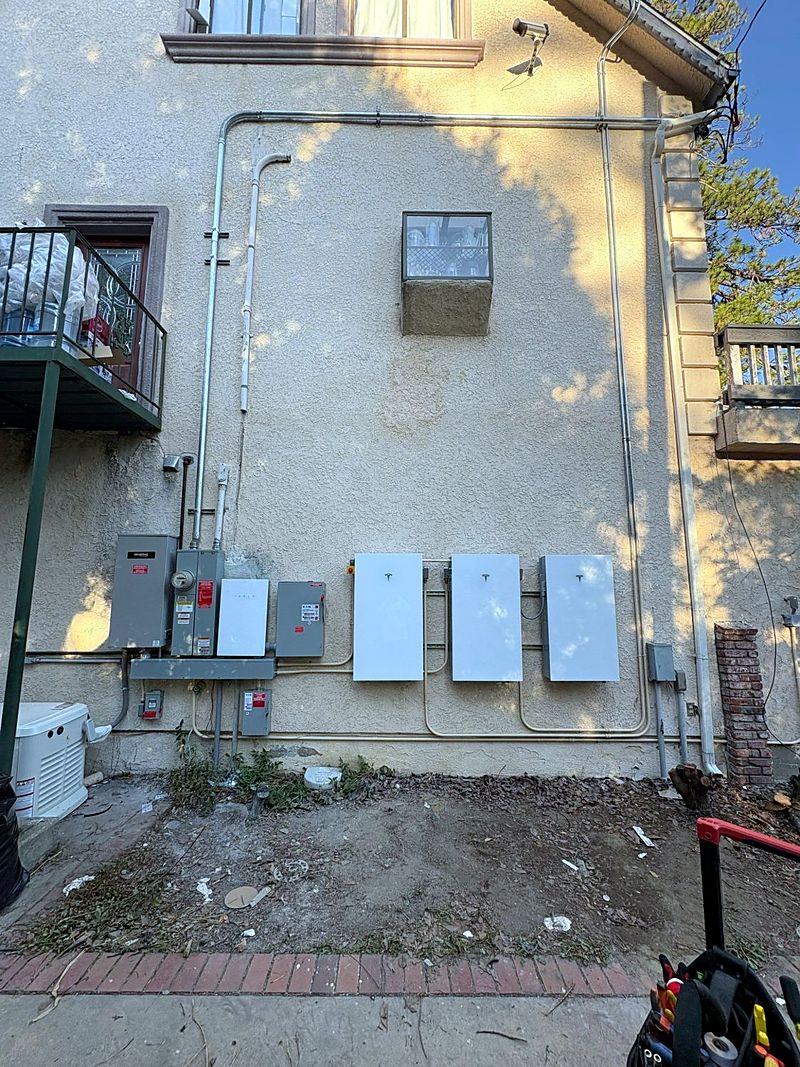
- Generators. Some homes combine batteries with a standby generator for long outages, like the installation in our photos.
Questions to ask before you buy
- Which circuits will run in an outage: the whole home, or a protected-loads panel? Can the battery start my air conditioner or well pump?
- How many hours of backup does the design give for my actual evening load, not an average home?
- Was the savings estimate built on my utility’s rules (SCE’s hourly export values or LADWP net metering)?
- Does the price include any panel, subpanel or main-breaker work, permits and utility paperwork?
- What does the warranty cover in years, cycles or throughput, and what capacity is guaranteed at the end?
- If I already have solar, how does adding storage affect my existing net metering arrangement?
- Does the design leave room to add capacity later?
The cheapest battery is the one that is sized correctly the first time. An undersized system disappoints in the first outage; an oversized one pays for capacity you never use.
How we quote storage
We start from your bills, your utility, your panel and what you want to keep running in an outage, then recommend equipment and size. As a market reference, EnergySage puts a 13 kWh California system at about $13,482 before incentives (October 2026); a firm quote depends on backup scope, the main panel and the utility. See battery storage, or call (818) 405-9062.
23 photographs from our own jobs →
Sources and further reading
- EnergySage — Cost of battery storage in California (updated October 4, 2026) — accessed October 8, 2026
- Lawrence Berkeley National Laboratory — U.S. Distributed Solar and Storage: 2025 Data Update — accessed October 8, 2026
- IRS — FAQs for modification of sections 25C, 25D, 25E, 30C, 30D, 45L, 45W and 179D under Public Law 119-21 (OBBB) — accessed October 8, 2026
- 26 U.S.C. § 48E — Clean electricity investment credit (Cornell LII) — accessed October 8, 2026
- SGIP — Program budget and waitlist status — accessed October 8, 2026
- LADWP — Self-Generation Incentive Program — accessed October 8, 2026
- SCE — How Solar Billing Plans work — accessed October 8, 2026
- LADWP — EV, Net Energy Metering and REO rates — accessed October 8, 2026
- Tesla — Powerwall 3 datasheet (PDF) — accessed October 8, 2026
- Enphase — IQ Battery 5P — accessed October 8, 2026
- FranklinWH — aPower 2 datasheet — accessed October 8, 2026
Questions we get asked
How much does a home battery cost in California?
EnergySage’s California data (updated October 4, 2026) puts home storage at about $1,037 per kWh of capacity, or about $13,482 for a 13 kWh system, with a typical range of $11,460 to $15,504 before incentives. Larger systems scale roughly with capacity: about $20,741 for 20 kWh.
Is there still a federal tax credit for home batteries?
Not for homeowners who buy one. The IRS says the Section 25D credit, which covered qualifying home battery storage, does not apply to expenditures made after December 31, 2025, and the expenditure is made when installation is completed. A battery owned by a third party, for example under a lease, may still qualify for the business credit, and storage is not subject to the 2027 solar cutoff.
Can I still get the SGIP battery rebate?
Only in limited cases. As of December 31, 2025, SGIP accepts new applications only to its Residential Solar and Storage Equity budget, which is fully reserved; new applications go on a waitlist funded as earlier projects drop out. That budget is for income-qualified households. Treat SGIP as a possibility to apply for, not something to count on in a budget.
Is a battery worth it on NEM 3.0?
For many SCE homes, yes, because daytime exports earn little: SCE lists 2026 average summer export values of about 6¢ per kWh in the daytime against about 21¢ from 4 to 9 p.m. A battery stores midday solar and uses it in the evening. Whether it pays back depends on your usage and rate, so model it before buying.
Is a battery worth it on LADWP?
The case is different. LADWP’s net metering rider credits excess solar at your rate schedule’s energy pricing rather than at hourly export values, so the bill-savings argument for storage is weaker than under NEM 3.0. On LADWP, batteries are mostly about backup power and resilience.
How big a battery do I need?
Lawrence Berkeley National Laboratory found the median residential battery installed in 2024 was 13.5 kWh, with most between 10 and 20 kWh. The right size depends on what you want to keep running during an outage and how much evening load you want to shift.
Which battery brands does Current Energy install?
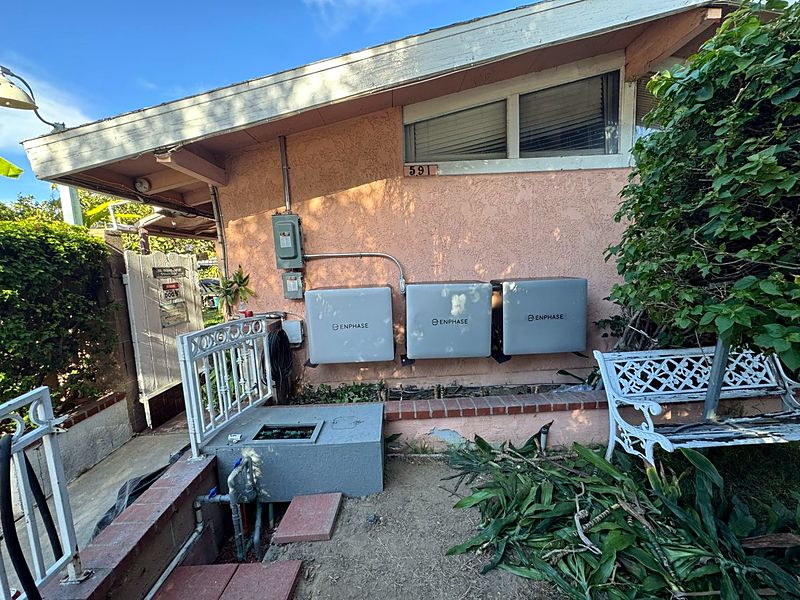
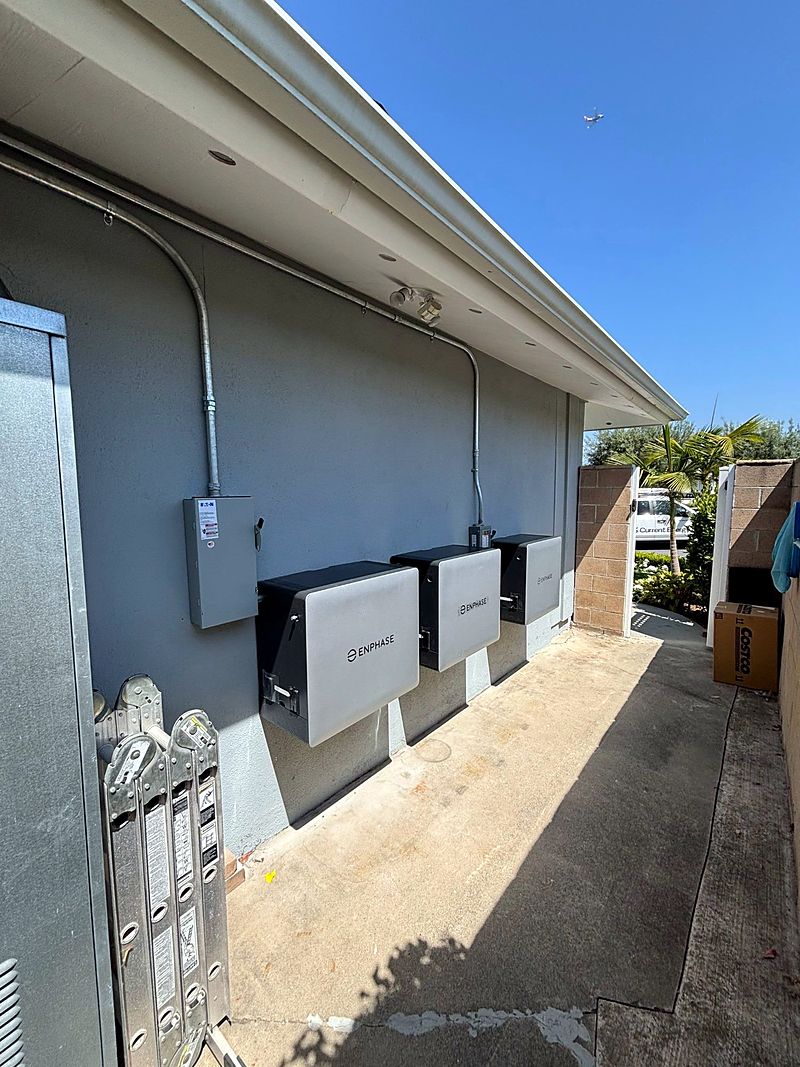
Our project photos include Tesla Powerwall and Enphase battery installations. We recommend equipment after looking at your panel, your loads and whether you want whole-home or essential-load backup.
Last updated October 2026
A battery sized to your home, not a brochure.
Send twelve months of bills, a photo of your main panel and what you want backed up. We will tell you whether storage pays on your utility, and what it costs.