LADWP solar rebates and programs in 2026
There is no simple LADWP solar rebate any more. Here is every program LADWP lists, what each one pays, who qualifies, and which one fits your property.
Short answer
LADWP does not currently list an upfront rebate for customer-owned rooftop solar. Its solar value now comes through programs: net energy metering bill credits, the Solar Rooftops roof-lease (up to $900 a year for 20 years), Shared Solar for apartment residents, income-qualified SGIP incentives, and the Feed-in Tariff, which pays 13.5–14.5¢ per kWh plus a carport incentive for power sold to LADWP. Because LADWP is a municipal utility, none of this is NEM 3.0. Federally, the homeowner 25D credit ended after 2025, while businesses can still claim 48E if solar is in service by the end of 2027.
On this page
Every LADWP solar program at a glance
| Program | Who it is for | What you get | Status |
|---|---|---|---|
| Net energy metering | Customers with their own system up to 1 MW | Excess energy credited at your rate schedule’s energy pricing | Open |
| Solar Rooftops | Owner-occupied homes on R1-A, R1-B, R1-D or R1-E | $360–$900 a year for up to 20 years; LADWP owns the system and the energy | Open, subject to LADWP evaluation |
| Shared Solar | Residents of apartments, condominiums and duplexes | Fixes a portion of the electric bill for 10 years | Listed by LADWP |
| SGIP (via LADWP) | Qualifying income-eligible residential customers | Incentives for solar and battery storage | Waitlist; no guarantee of funding |
| Feed-in Tariff (FiT) | Owners and developers of projects 30 kW and up | 13.5–14.5¢/kWh for 20 years; carport incentive $0.90–$1.70/W | 57.8 MW of 235 MW available as of September 18, 2026 |
| FiT+ pilot | Solar-plus-storage projects | Competitive pricing, interconnection reimbursement | Tranche A window closed August 16, 2026 |
| Utility Built Solar | City-owned rooftops and parking lots | LADWP builds on City property | Not open to private owners |
| Virtual Net Metering | Listed on LADWP’s solar programs page | See LADWP for terms | Check with LADWP |
Net energy metering
Net energy metering is how most LADWP customers who install their own solar get value from it. According to LADWP’s rate pages, the rider applies to customer-owned solar systems of 1 MW or less that primarily offset the customer’s own load.
How credits work
Excess energy is credited at the energy pricing of your rate schedule. Credits carry forward but cannot pay taxes or minimum charges, apply only to the meter that measured them, and are zeroed when service ends.
Paperwork by size
Systems of 10 kW or less on single-phase service usually need no interconnection agreement and get a photo inspection, unless the job includes a panel upgrade or multiple tenants. Above 10 kW an Interconnection Agreement is required.
Commercial sizes
From 30 kW up to 1 MW, LADWP requires engineering review and a mandatory pre-construction meeting. Systems of 1 MW and above follow a separate process.
Costs
LADWP lists a one-time $130 expenditure recovery charge per interconnection submittal, and the customer pays interconnection costs.
Because exports are credited this way rather than at the low hourly values of NEM 3.0, the economics of an LADWP system look different from an SCE one. See home solar cost in Los Angeles and, for SCE homes, SCE NEM 3.0 export rates.
Solar Rooftops
Solar Rooftops is not a rebate: it is a roof lease. LADWP inspects the home, designs the system, pulls the LADBS permit, installs a 1–10 kW system, owns it and receives all of the energy. The homeowner receives a fixed annual check of $360 to $900, depending on system size, for up to 20 years ($7,200 to $18,000), regardless of how much the system produces. The homeowner’s electric bill does not change.
Eligibility per LADWP: residential customers on rate schedules R1-A, R1-B, R1-D or R1-E, in an owner-occupied home that passes LADWP’s evaluation for roof strength and shading; LADWP’s April 2026 fact sheet specifies a single-family home with composition shingles. It suits homeowners who want a modest payment without owning equipment. If you want to cut your own bill, owning your system under net metering is the comparison to run.
Shared Solar and SGIP
Shared Solar lets residential customers in multifamily dwellings fix a portion of their electric bill for 10 years, according to LADWP. It is for residents rather than building owners; owners looking at their own roofs should see multifamily solar.
SGIP provides incentives to qualifying LADWP residential customers for solar and battery storage. LADWP’s SGIP page describes a waitlist with no guarantee of funding, notes that a lottery notification is not an award, and sets single-family eligibility at income at or below 80% of area median income. Statewide, SGIP accepts new applications only to its fully reserved equity budget. See home battery cost in California.
Feed-in Tariff and FiT+
The Feed-in Tariff lets property owners and developers sell the output of local solar projects directly to LADWP rather than using it on site. LADWP lists in-basin solar prices of 14.5¢ per kWh for 30–500 kW, 14.0¢ for over 500 kW to 3 MW and 13.5¢ over 3 MW, with 20-year contracts (or 10 years with extensions). Qualifying carport and canopy structures add $0.90 to $1.70 per watt depending on size and whether the site is in a disadvantaged community. Applications carry fees of $500 to $1,500, integration study fees of $750 to $2,500, a $1,500 interconnection study where required, and a $50 per kW development security deposit. LADWP reported 57.8 MW of its 235 MW still available as of September 18, 2026; a waitlist applies when it is full.
FiT+ is a competitive pilot for solar paired with storage, up to 35 MW in total, with interconnection cost reimbursement; standalone storage is not eligible and projects must come online within 12 months. Its first tranche window ran May 18 to August 16, 2026. Our Chatsworth project was built under the FiT; see commercial solar in Los Angeles and solar carports.
Federal and state incentives alongside LADWP
- Homeowners: the IRS says the 25D residential clean energy credit does not apply to expenditures made after December 31, 2025 (installation completed after that date).
- Businesses and third-party owners: Section 48E remains (6% base, 30% for facilities under 1 MW AC or that meet prevailing-wage and apprenticeship rules), but a solar facility that began construction after July 4, 2026 must be placed in service by December 31, 2027. Storage is not subject to that cutoff. See our federal solar tax credit guide.
- EV chargers: LADWP’s Commercial EV Charger Rebate is closed with an enrollment planned for October 2026; the federal 30C credit ended for property placed in service after June 30, 2026. See EV charging for multifamily properties.
- Property tax: see solar and California property tax.
Not tax or legal advice
Current Energy is a licensed contractor. This page summarises publicly available rules as they stood on October 8, 2026 and is not tax, legal or financial advice. Programs change. Confirm anything that affects a real decision with your CPA, tax counsel or the program administrator.
Which program fits
| If you are | Start with | Then compare |
|---|---|---|
| A homeowner who wants lower bills | Owning a system under net metering | Lease or PPA; battery for backup |
| A homeowner who wants a payment, not equipment | Solar Rooftops | Owning under net metering |
| An apartment resident | Shared Solar | Asking the owner about building solar |
| A business with daytime load | Net metering, sized to load | Feed-in Tariff for surplus roof or parking |
| An owner of a large roof or lot with little load | Feed-in Tariff, including carports | FiT+ with storage, next tranche |
We work in LADWP territory every week; our Sylmar office is inside it.
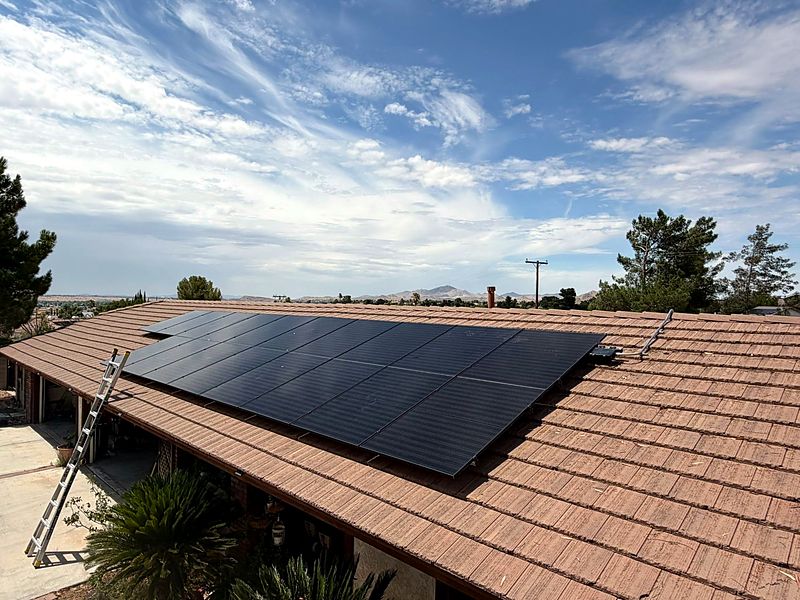
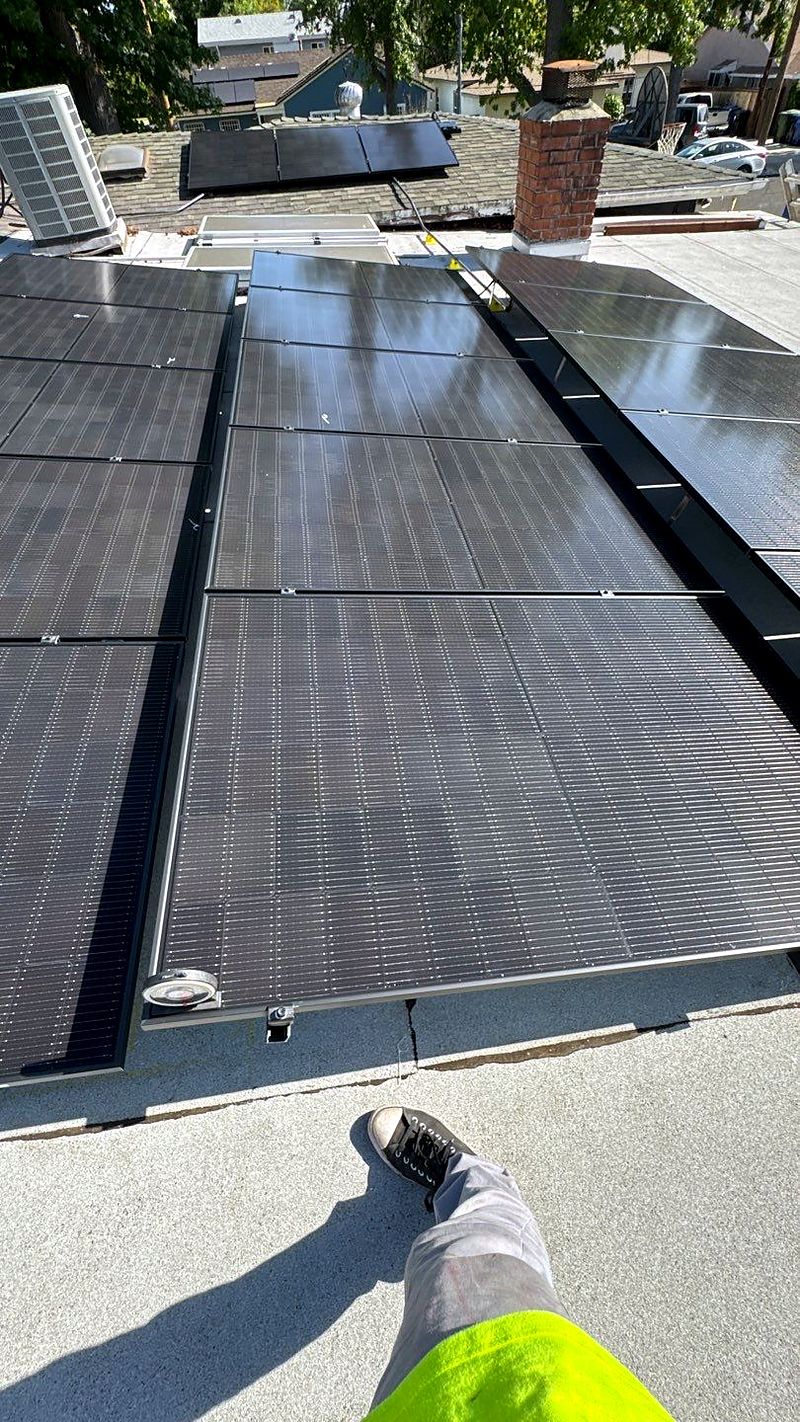
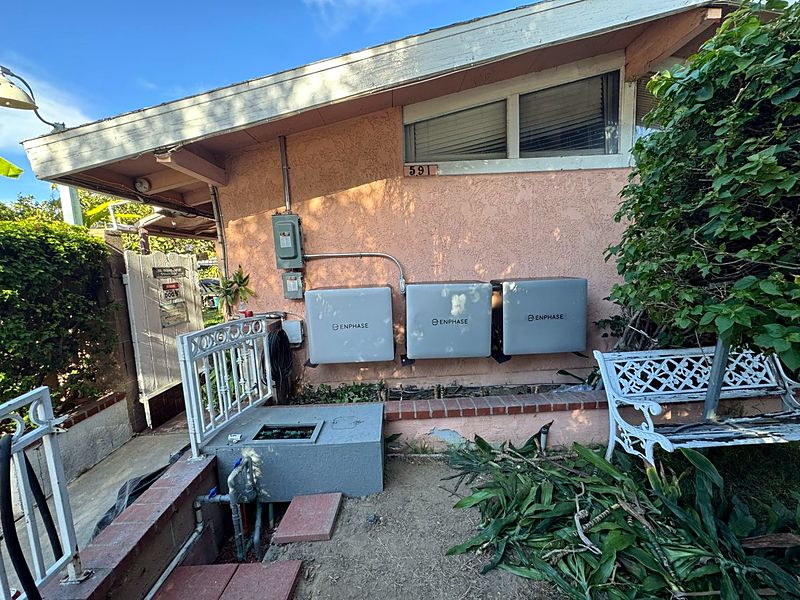
23 photographs from our own jobs →
Sources and further reading
- LADWP — Solar programs — accessed October 8, 2026
- LADWP — EV, Net Energy Metering and REO rates — accessed October 8, 2026
- LADWP — Net Energy Metering — accessed October 8, 2026
- LADWP — Solar interconnection requirements — accessed October 8, 2026
- LADWP — Solar Rooftops program — accessed October 8, 2026
- LADWP — Solar Rooftops fact sheet (rev. April 2026, PDF) — accessed October 8, 2026
- LADWP — Self-Generation Incentive Program — accessed October 8, 2026
- SGIP — Program budget and waitlist status — accessed October 8, 2026
- LADWP — Feed-in Tariff (FiT) Program — accessed October 8, 2026
- LADWP — Feed-in Tariff Plus (FiT+) Pilot Program — accessed October 8, 2026
- LADWP — Commercial EV Charger Rebate Program (last updated August 13, 2026) — accessed October 8, 2026
- IRS — FAQs for modification of sections 25C, 25D, 25E, 30C, 30D, 45L, 45W and 179D under Public Law 119-21 (OBBB) — accessed October 8, 2026
- 26 U.S.C. § 48E — Clean electricity investment credit (Cornell LII) — accessed October 8, 2026
- IRS — Alternative fuel vehicle refueling property credit (30C) — accessed October 8, 2026
Questions we get asked
Does LADWP still offer a solar rebate?
Not an upfront per-watt rebate for customer-owned rooftop solar; LADWP’s solar programs page does not list one as of October 2026. What LADWP offers instead is net energy metering bill credits, the Solar Rooftops roof-lease program, Shared Solar for multifamily residents, SGIP incentives for qualifying residential customers, and the Feed-in Tariff programs for selling power to LADWP.
How does LADWP net metering work?
Under LADWP’s net energy metering rider, a customer-owned system of up to 1 MW that primarily offsets your own load sends excess energy to the grid, and that energy is credited at your rate schedule’s energy pricing. Credits carry forward but cannot pay taxes or minimum charges, apply only to the meter that measured them, and are zeroed when service ends.
Is LADWP on NEM 3.0?
No. NEM 3.0 is the CPUC’s Net Billing Tariff for investor-owned utilities such as SCE. LADWP is a municipal utility and sets its own net metering rules, which can change independently of the CPUC.
What is LADWP Solar Rooftops?
LADWP designs, installs and owns a 1–10 kW system on an eligible owner-occupied home and pays the homeowner $360 to $900 a year, depending on system size, for up to 20 years ($7,200 to $18,000 in total). LADWP keeps all the energy, so the homeowner’s bill does not change. Eligibility includes residential rate R1-A, R1-B, R1-D or R1-E and, per LADWP’s fact sheet, a single-family home with composition shingles.
Can my business sell solar power to LADWP?
Yes, through the Feed-in Tariff if the project is at least 30 kW and capacity is available. LADWP lists in-basin solar prices of 14.5¢ per kWh for 30–500 kW, 14.0¢ for over 500 kW to 3 MW and 13.5¢ above 3 MW, with 20-year contracts and an additional Carport & Canopy Incentive for qualifying structures.
Are there LADWP fees for connecting solar?
Yes. LADWP lists a one-time $130 expenditure recovery charge per net metering interconnection submittal, and the customer pays interconnection costs. Feed-in Tariff projects have separate application, study and deposit requirements.
Can I still get the federal solar tax credit in Los Angeles?
Homeowners who buy a system completed after December 31, 2025 cannot; the IRS says the 25D credit ended for expenditures after that date. Businesses can still claim Section 48E, but a solar facility that began construction after July 4, 2026 must be placed in service by December 31, 2027.
Does LADWP have an EV charger rebate?
LADWP’s Commercial EV Charger Rebate Program is closed to applications, with an enrollment planned for October 2026 under revised terms and amounts. Check LADWP’s page for the new terms before budgeting.
Last updated October 2026
Which LADWP program fits your property?
Send a recent LADWP bill. We will tell you whether net metering, the Feed-in Tariff or something else gives you the best result, and say so if the answer is none of them yet.