Powerwall 3 vs Enphase IQ Battery 5P vs FranklinWH aPower 2
Three popular home batteries compared on the numbers their manufacturers publish, and on which kind of home each one suits.
Short answer
Tesla Powerwall 3 (13.5 kWh, 11.5 kW, built-in solar inverter, 10-year warranty), the Enphase IQ Battery 5P (5.0 kWh and 3.84 kW per modular unit, 15-year warranty) and the FranklinWH aPower 2 (15 kWh, 10 kW, 15-year or 60 MWh warranty) solve the same problem in different ways. Powerwall 3 suits new solar-plus-storage systems, Enphase suits homes that want modular sizing alongside Enphase microinverters, and FranklinWH suits large-capacity, AC-coupled backup. The right choice depends on your loads, your existing solar and your utility.
On this page
Side-by-side specifications
All figures are from each manufacturer’s published datasheet or product page, accessed October 8, 2026. Check the current datasheet before you buy; manufacturers revise specifications.
| Tesla Powerwall 3 | Enphase IQ Battery 5P | FranklinWH aPower 2 | |
|---|---|---|---|
| Usable energy per unit | 13.5 kWh | 5.0 kWh | 15 kWh |
| Continuous power per unit | 11.5 kW AC | 3.84 kW | 10 kW (11.5 kVA) |
| Peak power | See datasheet | 7.68 kW for 3 s; 6.14 kW for 10 s | 15 kW for 10 s |
| Coupling | Integrated hybrid inverter; up to 20 kW DC solar, 6 MPPTs | AC-coupled, six embedded grid-forming microinverters | AC-coupled, with aGate controller |
| Scaling | Up to 4 units supported | Modular, multiple units | Up to 15 units per aGate |
| Efficiency | 97.5% solar-to-home; 89% solar-to-battery-to-home | See datasheet | 90% round trip (grid–battery–load) |
| Chemistry | See datasheet | See datasheet | Lithium iron phosphate (LFP) |
| Weight | 130 kg (287 lb) | See datasheet | 162 kg (357 lb) complete |
| Warranty | 10 years | 15-year limited, up to 6,000 cycles | 15 years or 60 MWh throughput |
How each system is built
Tesla Powerwall 3
An integrated battery and solar inverter. It takes up to 20 kW of DC solar directly through six MPPTs and delivers 11.5 kW AC continuous per unit, which makes it a compact choice for a new solar-plus-storage system.
Enphase IQ Battery 5P
Small 5 kWh building blocks, each with six grid-forming microinverters. Backup requires the IQ System Controller 3/3G. It pairs naturally with Enphase microinverter solar and lets capacity be added in 5 kWh steps.
FranklinWH aPower 2
A 15 kWh AC-coupled LFP battery managed by the aGate. It lists 8 kW charge power, 10 kW continuous output and a 185 A locked-rotor start capability, aimed at running large loads such as air conditioners.
What they share
All three provide backup and time-of-use shifting. The differences are in architecture, power per unit, how they scale and warranty terms.
Which one fits which home
| Situation | Often a good fit | Why |
|---|---|---|
| New solar plus storage | Powerwall 3 | Solar inverter and battery in one unit |
| Existing Enphase microinverter solar | Enphase IQ Battery 5P | Same ecosystem and monitoring; modular sizing |
| Large loads and long outages | FranklinWH aPower 2 or multiple Powerwall 3 units | Higher capacity per unit and strong motor-start ratings |
| Small essential-loads backup | Enphase in a small configuration | Capacity added in 5 kWh steps |
| Home with a standby generator | Any of the three, designed for generator integration | Batteries cover short outages; generator covers long ones |
Whichever you choose, the electrical design matters as much as the battery: panel capacity, backup subpanel versus whole-home, and where the units can legally go. See panel upgrade cost in Los Angeles.
Cost and incentives
We do not publish brand-by-brand prices here because installed cost depends on configuration, backup scope and electrical work. As a market benchmark, EnergySage’s California data (updated October 4, 2026) puts installed storage at about $1,037 per kWh, or about $13,482 for 13 kWh. Homeowners buying in 2026 get no 25D federal credit, and SGIP is limited to a fully reserved, wait-listed equity budget. Full detail in home battery cost in California.
The value of any battery depends on your utility. On SCE’s Solar Billing Plan, summer evening export values average about 21¢ per kWh against about 6¢ in the daytime, so shifting energy pays (see SCE NEM 3.0 export rates). On LADWP, net metering credits excess at your rate’s energy pricing, so a battery is mainly about backup.
Not tax or legal advice
Current Energy is a licensed contractor. This page summarises publicly available rules as they stood on October 8, 2026 and is not tax, legal or financial advice. Programs change. Confirm anything that affects a real decision with your CPA, tax counsel or the program administrator.
How we choose
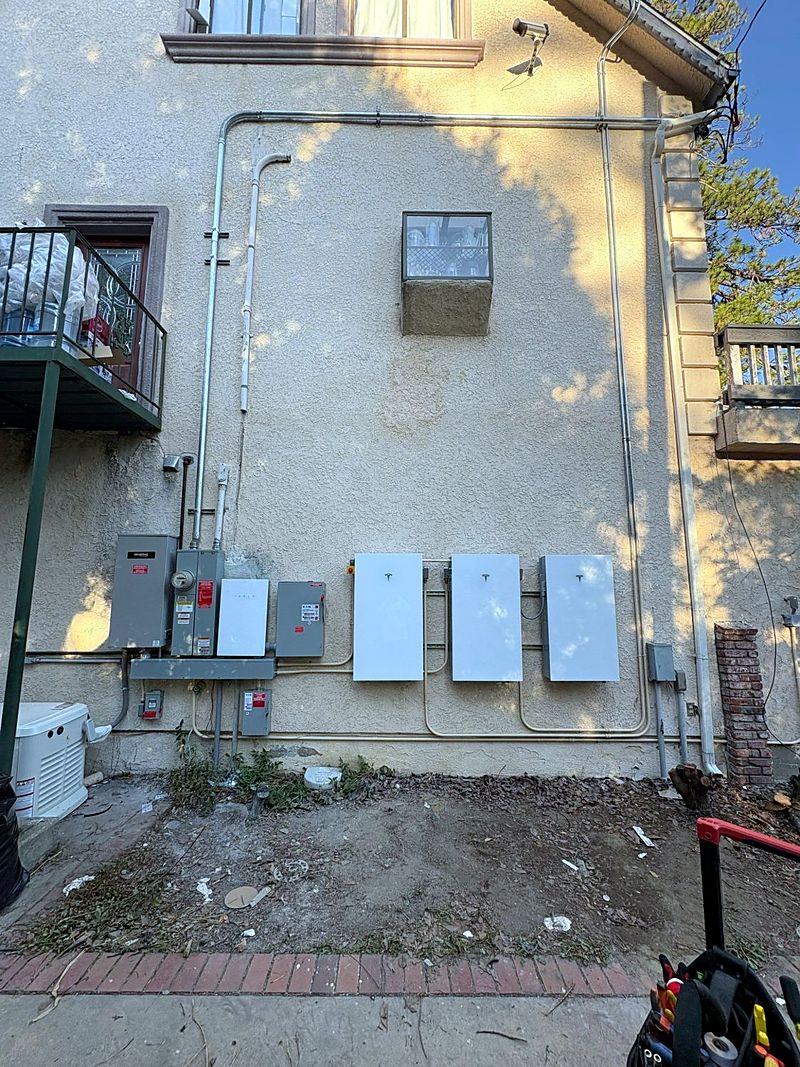
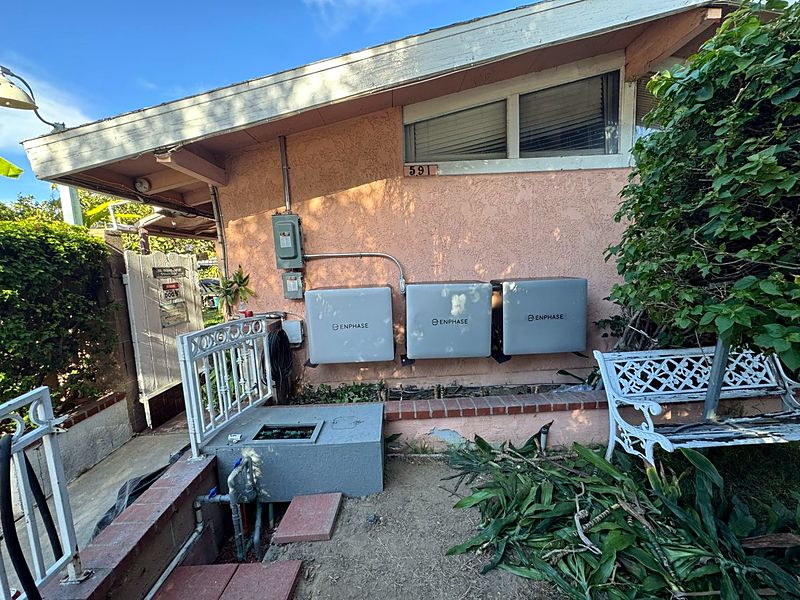
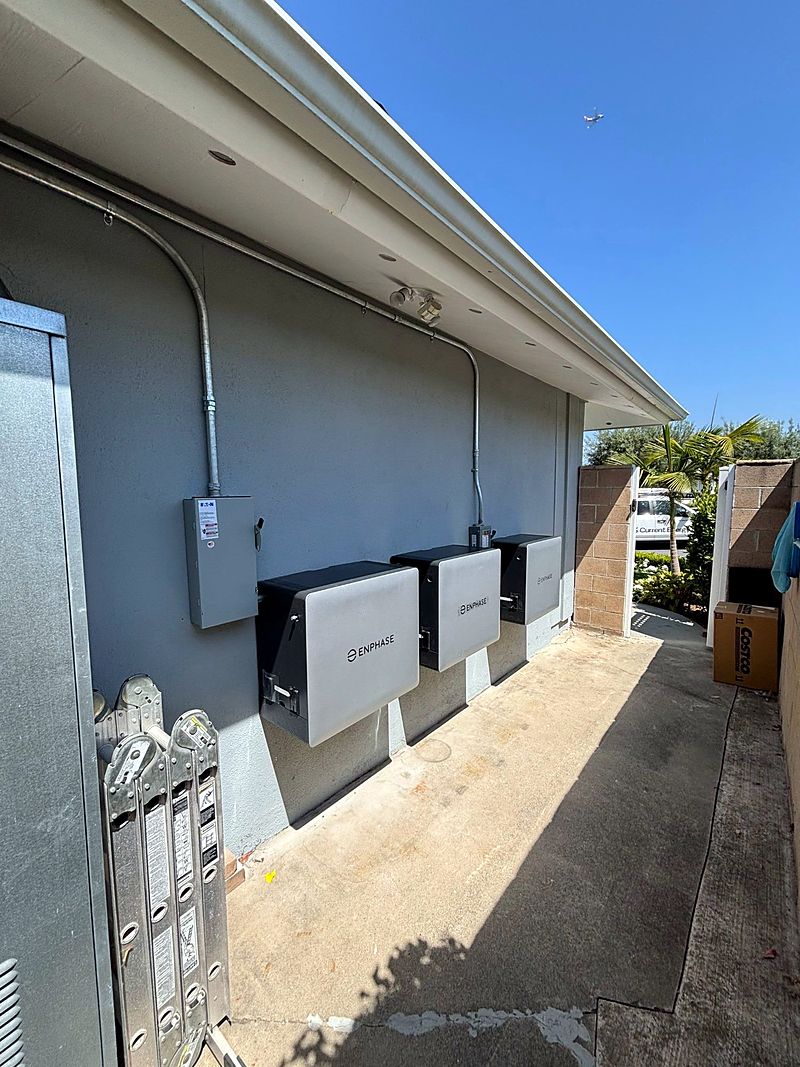
We start from what you want to keep running, your panel, your existing solar and your utility, then recommend equipment. Our project photos include Tesla Powerwall installations beside a standby generator and multi-unit Enphase installations. See battery storage.
23 photographs from our own jobs →
Sources and further reading
- Tesla — Powerwall 3 datasheet (PDF) — accessed October 8, 2026
- Enphase — IQ Battery 5P — accessed October 8, 2026
- FranklinWH — aPower 2 datasheet — accessed October 8, 2026
- EnergySage — Cost of battery storage in California (updated October 4, 2026) — accessed October 8, 2026
- IRS — FAQs for modification of sections 25C, 25D, 25E, 30C, 30D, 45L, 45W and 179D under Public Law 119-21 (OBBB) — accessed October 8, 2026
- SGIP — Program budget and waitlist status — accessed October 8, 2026
- SCE — How Solar Billing Plans work — accessed October 8, 2026
- LADWP — EV, Net Energy Metering and REO rates — accessed October 8, 2026
Questions we get asked
Which has more capacity, Powerwall 3, Enphase or FranklinWH?
Per unit, the FranklinWH aPower 2 lists 15 kWh, Tesla Powerwall 3 lists 13.5 kWh and the Enphase IQ Battery 5P lists 5.0 kWh. Enphase is designed to be combined in multiples, so system capacity depends on how many units you install.
Which has the longest warranty?
Enphase lists a 15-year limited warranty on the IQ Battery 5P (up to 6,000 cycles), and FranklinWH lists 15 years or 60 MWh of throughput for the aPower 2. Tesla lists 10 years for Powerwall 3. Read the full warranty terms, including throughput and capacity-retention conditions.
Does Powerwall 3 need a separate solar inverter?
No. Tesla’s datasheet describes Powerwall 3 as supporting up to 20 kW DC of solar with six MPPTs, so it can serve as the solar inverter on a new system. Enphase and FranklinWH batteries are AC-coupled and work alongside separate solar inverters or microinverters.
Which is best for whole-home backup?
It depends on the loads you need to start and run. Powerwall 3 lists 11.5 kW continuous per unit; aPower 2 lists 10 kW continuous with 15 kW peak for 10 seconds; an IQ Battery 5P lists 3.84 kW continuous per unit, so Enphase systems reach higher power by adding units. Large motors such as air conditioners are the usual constraint.
Can I add a battery to my existing solar?
Usually, yes. AC-coupled batteries such as Enphase and FranklinWH are designed to sit alongside an existing array; If you are on an older net metering agreement, check how adding storage affects it first.
Is there a tax credit for these batteries?
Not for homeowners buying in 2026: the IRS says the 25D credit does not apply to expenditures made after December 31, 2025. Third-party-owned storage may qualify for the business credit. SGIP is limited to a wait-listed equity budget.
Last updated October 2026
The right battery is the one sized to your home.
Send a photo of your main panel, a year of bills and what you want backed up. We will recommend equipment and a size, with a site-specific quote.