Battery storage, sized from your load — not from a brochure
Under California’s Net Billing Tariff, the value of solar moved from what you export to what you keep. We design storage for commercial, multifamily and residential sites from twelve months of interval data and your actual rate schedule.
Rated 4.8★ on Google from 33 reviews · CSLB #1074466 · In-house crews · Free assessment, no obligation
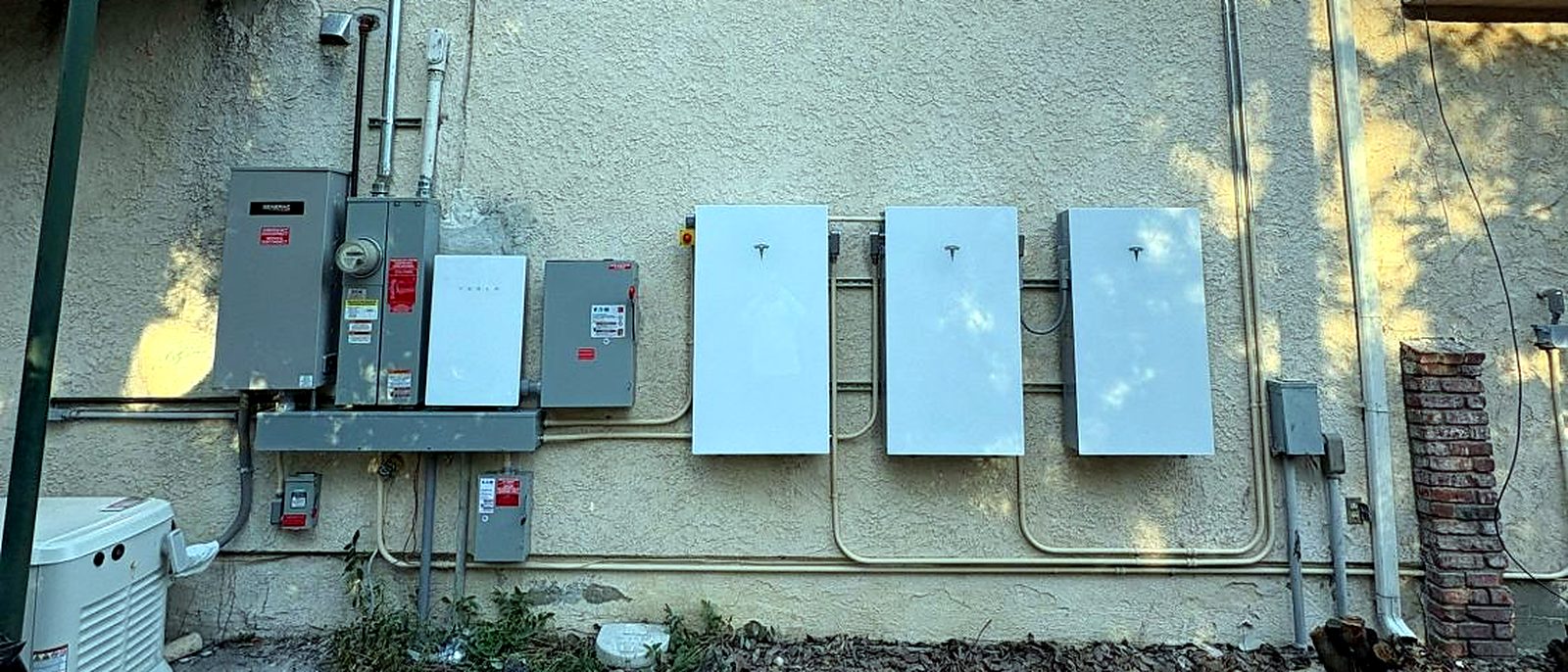
Why storage became the centre of the conversation
Before April 2023, California solar exported surplus energy to the grid and received close to retail value back. Under the Net Billing Tariff — commonly called NEM 3.0 — export credits are hourly values; SCE’s 2026 averages run from about $0.03 to $0.21 per kWh by season and hour while on-site consumption continues to offset the full retail rate, which in Southern California can be several times that.
The design consequence is blunt: the goal is no longer to generate as much as possible, it is to consume as much of your own generation as possible. A battery is the tool that moves midday production into the expensive evening hours. That is the whole argument.
Market context, without a Current Energy price, is in our home battery cost guide.
Under NEM 3.0, the question stopped being “how big an array fits on the roof” and became “how much of what it makes can we keep.”
The four jobs a battery does
Time-of-use arbitrage
Charge on cheap midday solar, discharge through the expensive 4–9pm peak window. On a time-of-use tariff this is a daily, compounding saving rather than an occasional one.
Demand-charge management
Commercial bills are partly driven by your single highest short-interval peak in the month. Discharging into that peak lowers the billed demand directly.
Backup power
Silent, instantaneous transfer for the circuits you designate — refrigeration, servers, medical equipment, life safety, essential lighting. No fuel, no start-up delay.
Self-consumption
Turning low-value exports into full-retail-rate self-supply. Under the Net Billing Tariff this is where most of the economic case now lives.
Sizing: the mistake we see most
Batteries are usually sized by someone reading a monthly kWh total off a bill. That number tells you almost nothing about when your load happens, and when is what storage is for.
We size from interval data — typically fifteen-minute resolution over twelve months — and your actual tariff. That shows the shape of your consumption, the height and timing of your peaks, and how much energy you would genuinely shift on a typical day versus a worst-case one. Two buildings with identical annual consumption can need very different systems, or one may not need storage at all.
Commercial and residential storage
| Commercial & multifamily | Residential | |
|---|---|---|
| Primary value | Demand-charge reduction and time-of-use arbitrage | Self-consumption under NEM 3.0 and evening peak avoidance |
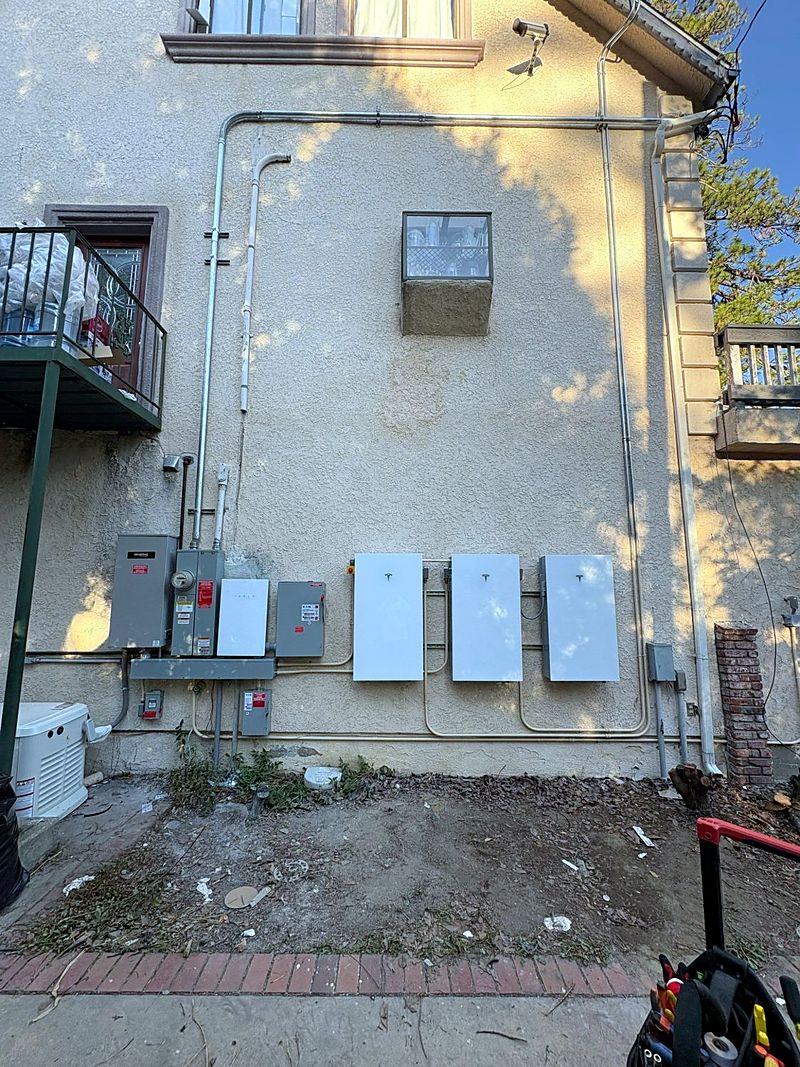
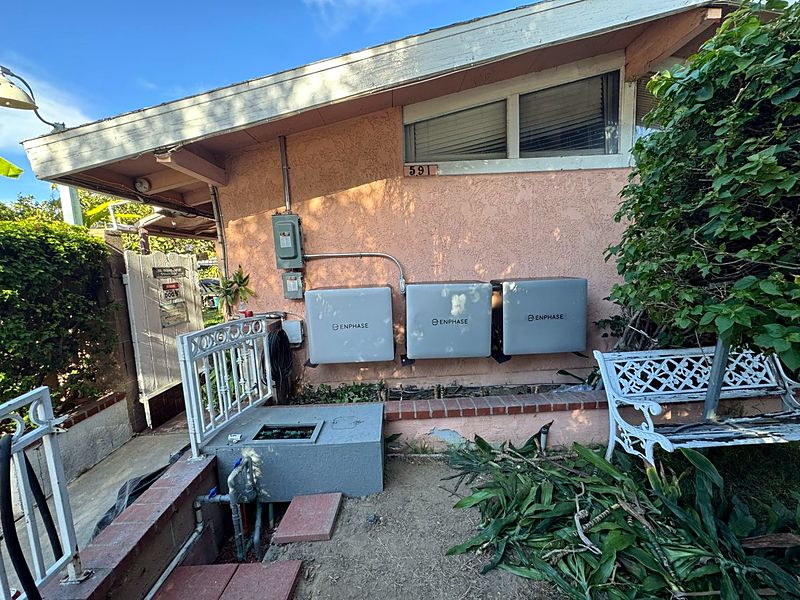
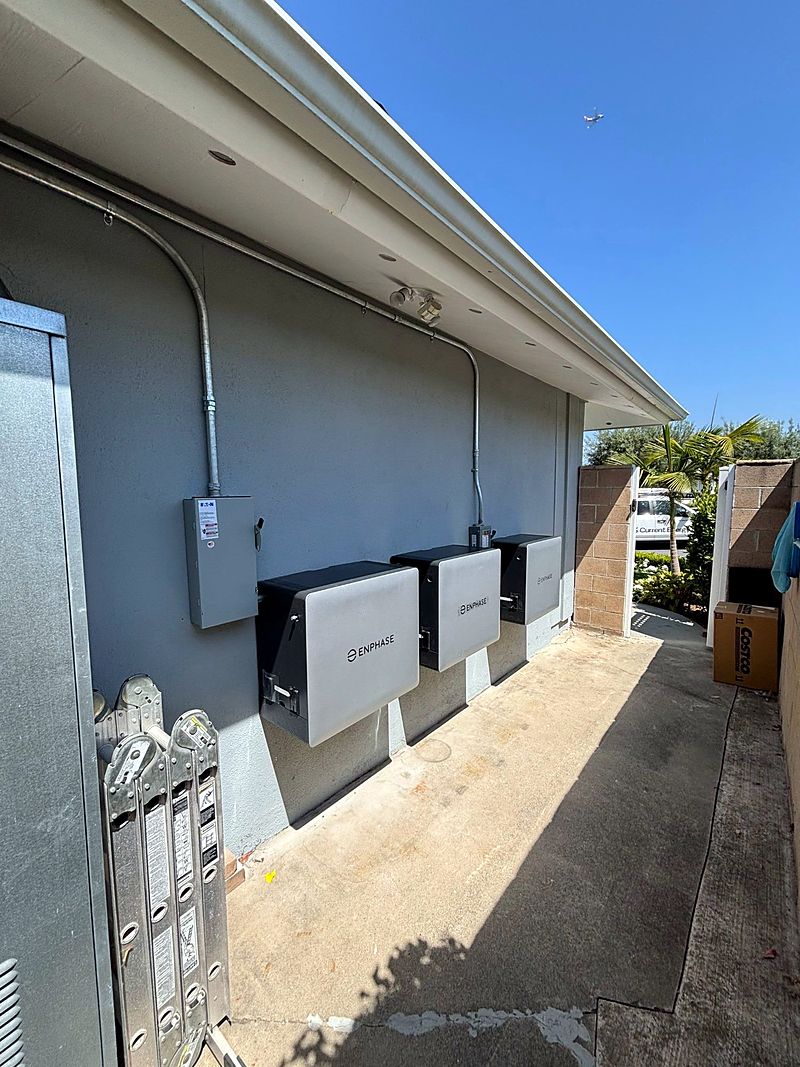
| Typical scale | Tens to hundreds of kWh, often modular and expandable | One or more wall-mounted units |
| Backup scope | Designated critical circuits and processes | Essential loads panel — refrigeration, lighting, outlets, sometimes HVAC |
| Incentives | Federal 48E credit, depreciation, SGIP where available | SGIP tiers where eligible; federal residential credit no longer available after 2025 |
| Key input | Interval data and rate schedule | Time-of-use plan and evening load |
Full incentive detail is on the incentives and financing page.
Questions we get asked
Do I need a battery to make solar worth it in California?
Not always, but far more often than before. Under the Net Billing Tariff, exported energy earns roughly four to eight cents per kWh while energy you use on site offsets your full retail rate. If your consumption is heavily concentrated in the middle of the day — some industrial and agricultural sites are — solar alone can still perform well. If your load peaks in the evening, which is most homes and much of retail and hospitality, storage is where the value now is.
Is a battery the same as a generator?
No. A battery gives you instant, silent, fuel-free backup for a defined amount of energy, and it earns its keep every single day through bill management. A generator runs indefinitely on fuel but does nothing for you the other 364 days. For long multi-day outages a generator still wins; for the outages most Southern California properties actually experience, a correctly sized battery is the better asset.
How long will a battery run my building?
That depends entirely on what you ask it to carry. Backing up an entire commercial building is rarely economic; backing up the circuits that actually matter — refrigeration, servers, life safety, a subset of lighting and outlets — usually is. We design the backup panel explicitly rather than promising whole-building coverage that will disappoint you.
Can I still get the SGIP rebate?
The general market budget is closed. Since December 31, 2025, new applications are accepted only to the Residential Solar and Storage Equity (AB 209) budget, which is fully reserved; new applications are wait-listed. See our SGIP page.
Let’s find out what your building can actually do.
Send twelve months of utility data — or one recent bill — and we will come back with a straight answer, including ‘not yet’ if that is the honest one.