Dec 31, 2027
Projects must be placed in service by Dec 31, 2027. Subject to eligibility.
Every step takes time — start now
- 1Design & permits
- 2Utility interconnection
- 3Equipment & install
Permits, utility review and equipment all take time.
Deadline approaching
Commercial solar · Sylmar, CA
Rooftop, carport, ground-mount and battery systems designed around your actual utility bill, and built by our in-house crews.
Projects must be placed in service by Dec 31, 2027. Subject to eligibility. Expiring commercial incentives →
Get a free site assessment
LADWP Feed-in Tariff · City of LA
Rent us your roof. We install and maintain the solar. We fund the project, including LADWP’s application fees and deposits.
*Terms apply. LADWP territory only. Subject to program approval.
Three partners with more than sixty years in Southern California development, engineering and energy run the company, and you deal with them directly.
Meet the team →


Deadline approaching
The deadline is real. So are our specialized skills and resources.
Dec 31, 2027
Projects must be placed in service by Dec 31, 2027. Subject to eligibility.
Every step takes time — start now
Permits, utility review and equipment all take time.
Dec 31, 2030
Qualifying safe-harbor projects may have until Dec 31, 2030.
Current Energy holds safe-harbor solar equipment. Not every project qualifies.
Safe-harbor equipment availability is limited.
Subject to eligibility. Agreement terms apply.
Prefer to talk? Call (888) 899-9484
Our work

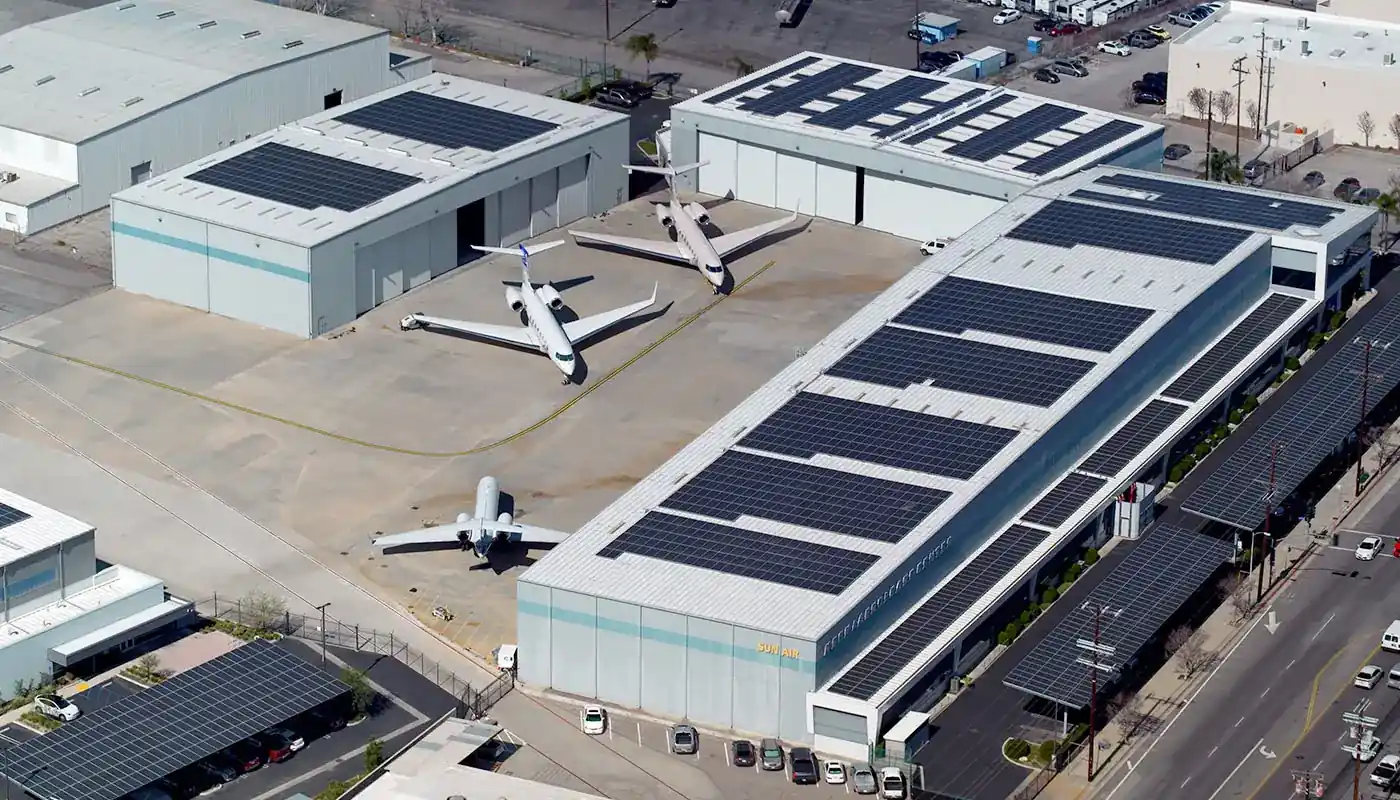
One of the largest solar projects in Los Angeles: 6,569 modules across nine hangar roofs and two carports at Van Nuys Airport, producing 4.5 million kilowatt hours a year.
See the project
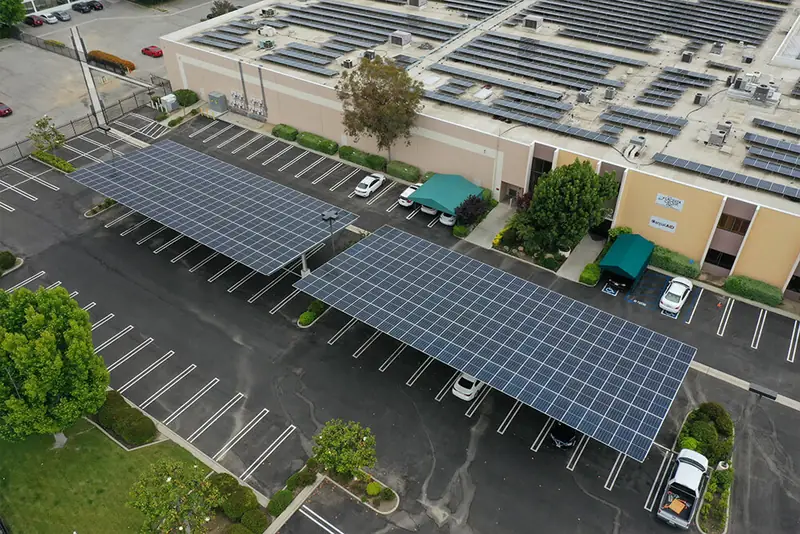
A Feed-in Tariff project on a 100,000 square-foot Chatsworth building: 3,000 rooftop modules, 324 more on two new carports, eight EV charging stations, and a new roof underneath the array.
See the project
A 123,000 square-foot perishable food distributor in Ontario with the load profile that makes the strongest case for solar: refrigeration that never switches off.
See the project
Office building rooftop solar, Santa Barbara.
See the project
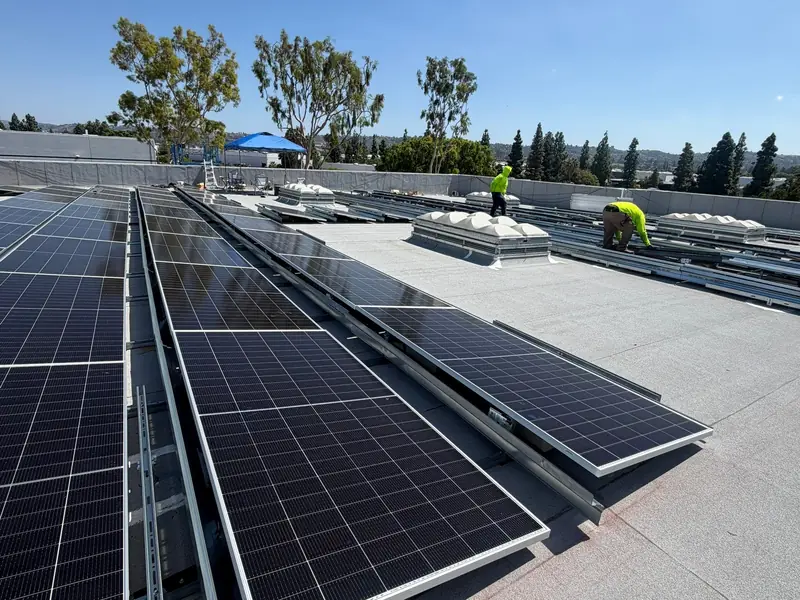
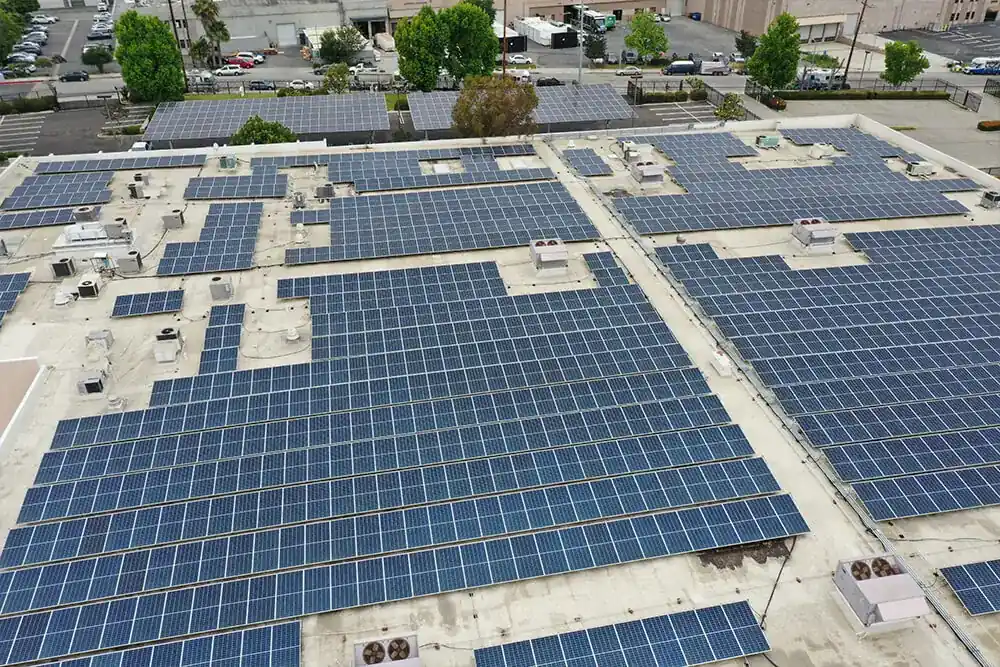
Commercial solar array on a flat warehouse roof.
See the project
Commercial solar project, now with permission to operate from the utility.
See the project
Canopy array at sunset, La Quinta.
See the projectBig jobs need specialized skills and resources. We have both.
One recent utility bill is enough to start. Design, installation and service are all done in-house by Current Energy crews. Nothing is subcontracted.
Steve Argubrite, co-owner of the Van Nuys Prop Park, talks about why he chose to use Current Energy to design, build, and manage his solar energy system. See the project →
Dean Vitakis, the owner of Vitco Foods in Ontario, CA, talks about his experience with Current Energy. See the project →
Joseph, Chatsworth building owner, talks about the new roof installed under the solar array on his 100,000 sq ft building. See the project →
Swipe for more →
I have now signed on for two projects with Current Energy and am about to sign my third. Why? Because everything I was told, from construction timeline to the kWh productions, was spot on. This company is first-rate, professional, polite, and responsive.
Current Energy’s team was outstanding to work with. I highly recommend them for any solar installation.
I wholeheartedly recommend them for their outstanding service, attention to detail, and long-term commitment to customer satisfaction. They have exceeded our expectations, and we couldn't be happier with our decision to go solar. We're now doing our commercial building with them, and the service is as good as when they did our house!
Design, installation and service are all done in-house by Current Energy crews. Nothing is subcontracted.

Flat and low-slope roofs, checked for structure and roof age first.
Commercial roofing
Add panels over your parking lot, alongside the rooftop array, with covered parking.
Commercial solar carports
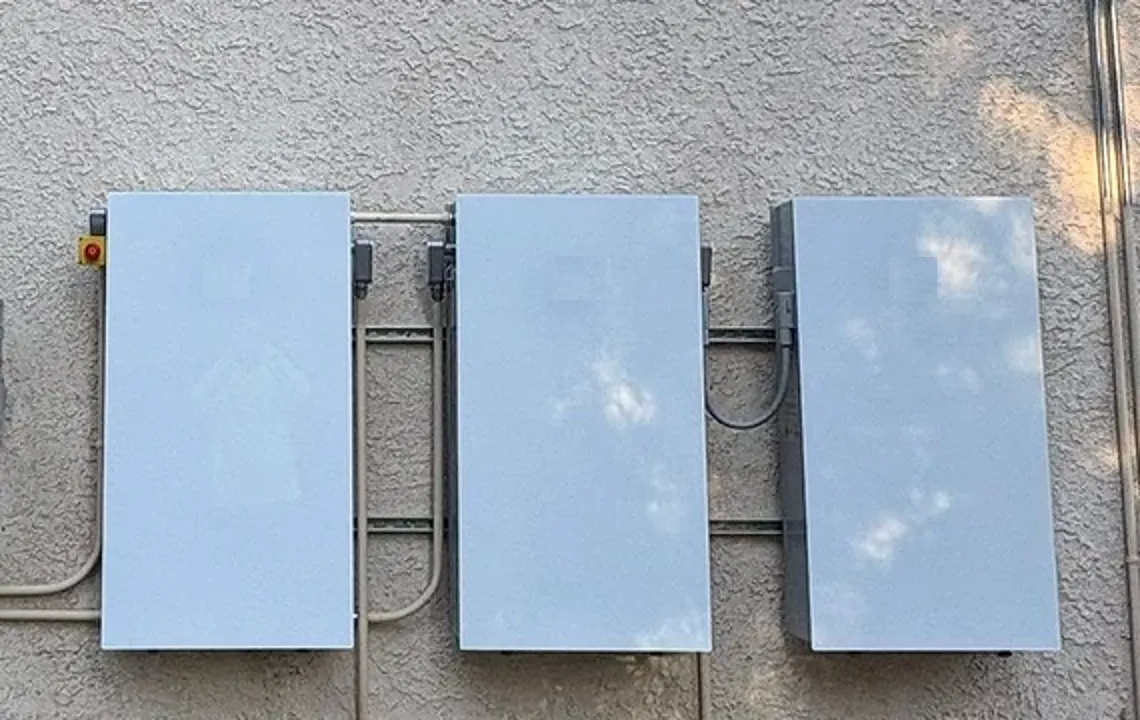
Shift solar into the expensive hours and trim demand peaks.
Battery storageWe also build ground-mount arrays for open land, larger campuses and processing sites: book a site review.
Also from Current Energy: EV charging · Commercial lighting · SGIP battery rebate
Commercial energy bills are rarely just about kilowatt-hours. Rate schedules, time-of-use periods and demand charges billed on your highest monthly peak all shape what a solar system can do for a building. So does your utility. LADWP, SCE, Burbank Water & Power and Glendale Water & Power each have their own rules for exports and interconnection.
That’s why we don’t size a system from square footage. We start with your bills: one recent bill is enough to begin.
City and project type change the rules. See commercial solar in Los Angeles, and read up on NEM 3.0 explained, SCE NEM 3 export rates and LADWP solar programs & rebates.

Refrigeration runs around the clock, so energy is one of the biggest costs on site.
Manufacturing, processing and other sites where the power bill is a major line item.
Large flat roofs and steady daytime load. Structure and roof age drive the design.
Predictable weekday load. Metering and lease structure decide who captures the benefit.
Big parking lots make carports a strong add-on to a rooftop array, and storage can matter when load peaks after sunset.
Common-area load, virtual net metering where available, and Title 24 requirements. Multifamily solar →
Public and school projects have their own review and procurement rules. Tell us about the site and we’ll tell you plainly whether it fits our scope.
Ownership structures exist for organizations without federal tax liability. Ask us to compare them for your situation.
We review your bills, rate schedule, roof or lot, and electrical service, then tell you if the site is a fit.
Array layout, production modeling with stated assumptions, structural and electrical design, and a side-by-side look at ownership options.
Plan check with your city or county and the utility interconnection application, managed by us.
Built by Current Energy’s own crews, with commissioning and monitoring setup at handover.
Production review and service after the system is on.
Our own crews, start to finish. The people who design your system work alongside the crews who build and service it, so there’s one point of contact for the whole project.
Book a Site ReviewWhich options are open to you depends on your utility, your tax position and your site. We lay them out side by side so you can compare them with your CPA. We don’t steer you toward one.
Tax-exempt organizations. Nonprofits, schools and churches may qualify for direct pay of the federal credit, subject to eligibility.
Current Energy is a licensed contractor, not a tax or legal adviser. Program availability changes; confirm anything that affects a decision with your CPA or tax counsel.
If you own the system, your project may qualify for an up to 30% federal tax credit (6% base; 30% if prevailing wage and apprenticeship rules are met; eligibility varies, consult a tax advisor). Projects must be placed in service by Dec 31, 2027. Subject to eligibility. Credit amounts and eligibility are set by federal law and IRS guidance, not by us; nothing here is a promise of any credit or outcome.
Talk to your CPA, and we’ll provide the project documentation they need. More: 2026 federal credit · what the Dec 31, 2027 deadline means · expiring commercial incentives · solar property tax
Get a free site assessmentThe federal solar incentive for commercial projects has a firm date: customer-owned projects generally need to be placed in service by Dec 31, 2027, subject to eligibility. Commercial projects take time to design, permit and build, and not every owner can make that date.
There may be another path. Current Energy holds safe-harbor solar equipment. When a qualifying project uses that equipment and Current Energy owns the system under a power purchase agreement (PPA) or lease, the project may have until Dec 31, 2030. Our in-house crews design, build and maintain the system, and you don’t need to own it upfront.
This option doesn’t replace the 2027 rule, and not every project qualifies. Eligibility depends on federal rules, your site and the agreement terms. Talk with your tax advisor. Call us, or book a site assessment, and we’ll tell you which path fits your building.
| Dec 31, 2027 path | Dec 31, 2030 path | |
|---|---|---|
| Who owns the system | You (customer-owned) | Current Energy |
| How you get solar | Purchase | PPA or lease (terms apply) |
| Deadline | Placed in service by Dec 31, 2027 | Qualifying safe-harbor projects may have until Dec 31, 2030 |
| Equipment | Standard procurement | Current Energy’s safe-harbor equipment |
| Maintenance | Service plan available | Current Energy maintains the system |
| Eligibility | Subject to eligibility | Subject to eligibility |
No. The Dec 31, 2027 placed-in-service date still applies to customer-owned projects. The 2030 path applies only to qualifying projects that use safe-harbor equipment under the ownership structure described above.
It’s solar equipment that was bought and documented under federal rules for when construction begins. Allocating it to a project may preserve that project’s eligibility for longer. Whether a specific project qualifies depends on the rules and the documentation.
Not on the 2030 path. Current Energy owns and maintains the system under a PPA or lease. Terms apply and are reviewed with you before you sign.
It depends on your site, your utility, your timeline and the eligibility rules. A site assessment is the first step. We don’t give tax advice, so please confirm with your tax advisor.
Subject to eligibility. Federal incentive rules are complex and may change; consult a qualified tax advisor. Agreement terms apply. Safe-harbor equipment availability is limited.
We review your utility bills and rate schedule, look at your roof or parking lot and your electrical service, and tell you whether the site is a strong candidate. If it is, we follow up with a preliminary layout and a side-by-side look at ownership options. There’s no obligation.
It depends on the site more than the panels. Structure and attachment, the distance to your point of interconnection, your service capacity, roof condition and utility requirements all move the price. We price from a site-specific design, not a brochure number. More in our commercial solar cost guide.
Start with the roof: if it has the space, structure and remaining life, a rooftop system avoids paying for a canopy. Carports are usually added alongside it, when the roof can’t hold enough panels for your load or when you want covered parking and EV charging. We design both together and show you the difference.
Yes. Whether storage makes financial sense depends on your rate schedule, demand charges and export rules. We model it against your actual tariff, and if it doesn’t pencil we’ll say so. See battery storage.
No. Buying outright, a PPA, or a prepaid PPA or lease may be available, depending on your utility, tax position and site. We compare them side by side.
Yes. LADWP is a municipal utility with its own net metering and Feed-in Tariff rules. SCE customers fall under the state’s Net Billing Tariff. See LADWP vs. SCE solar.
Timelines depend on system size, plan check with your city or county, and utility interconnection. Those steps often take longer than construction itself. We give you a dated schedule for your specific project during design.
Current Energy’s own crews, out of our Sylmar office. The same company that designs your system builds it and supports it afterward.
Deadline approaching
One recent utility bill is enough to start. We’ll tell you whether your site is a strong candidate, a marginal one, or one to revisit after a roof replacement.
until Dec 31, 2027 (as of Oct 18, 2026)
Prefer to talk? Call (888) 899-9484, or use our contact page.
Based at 15823 Monte St, Suite 101 in Sylmar. See commercial solar in the San Fernando Valley.
Areas we serve: Sylmar, San Fernando, Granada Hills, Northridge, Chatsworth, Van Nuys, North Hollywood, Sherman Oaks (San Fernando Valley), Burbank & Glendale, Santa Clarita, Los Angeles, Ventura County and Orange County.