Commercial solar in the San Fernando Valley
Warehouses, light industrial, retail and offices from Sylmar to Woodland Hills. We start with the utility on your bill, because in the Valley it changes the whole calculation.
Short answer
Commercial solar in the San Fernando Valley starts with one question: which utility is on the bill. Most Valley neighbourhoods inside Los Angeles city limits are on LADWP, which runs its own net metering and Feed-in Tariff; Burbank and Glendale have their own municipal utilities; much of the rest is SCE under the Net Billing Tariff. Current Energy is based in Sylmar, and its Valley work includes the Van Nuys Airport array and a Feed-in Tariff project in Chatsworth.
On this page
One valley, several utilities
The San Fernando Valley looks like one market and is not. Two buildings on the same boulevard can sit in different utility territories, with different export values, interconnection steps and incentive programs. We check the bill before we design anything.
| Utility | Where | What governs a new commercial solar system |
|---|---|---|
| LADWP | Valley communities inside Los Angeles city limits, e.g. Sylmar, Pacoima, Van Nuys, North Hollywood, Northridge, Chatsworth, Reseda, Woodland Hills | LADWP’s own net energy metering rider for customer-owned systems up to 1 MW; or the Feed-in Tariff (30 kW and up) to sell output to LADWP |
| Burbank Water and Power / Glendale Water and Power | Cities of Burbank and Glendale | Each city’s own municipal program and interconnection rules |
| Southern California Edison | Most areas outside those city limits | CPUC Net Billing Tariff (“NEM 3.0”), where exports are credited at hourly values that are low at midday and higher in the evening |
For LADWP buildings, see commercial solar in Los Angeles for the net metering versus Feed-in Tariff comparison, and LADWP solar programs and rebates for every current program. For SCE buildings, NEM 3.0 explained covers why storage changes the result.
What Valley buildings are good at
The Valley’s commercial stock suits solar well: light industrial along the Van Nuys and Pacoima corridors, distribution and manufacturing buildings with large flat roofs, retail centres with big surface parking lots, and professional offices with daytime occupancy.
Flat industrial roofs
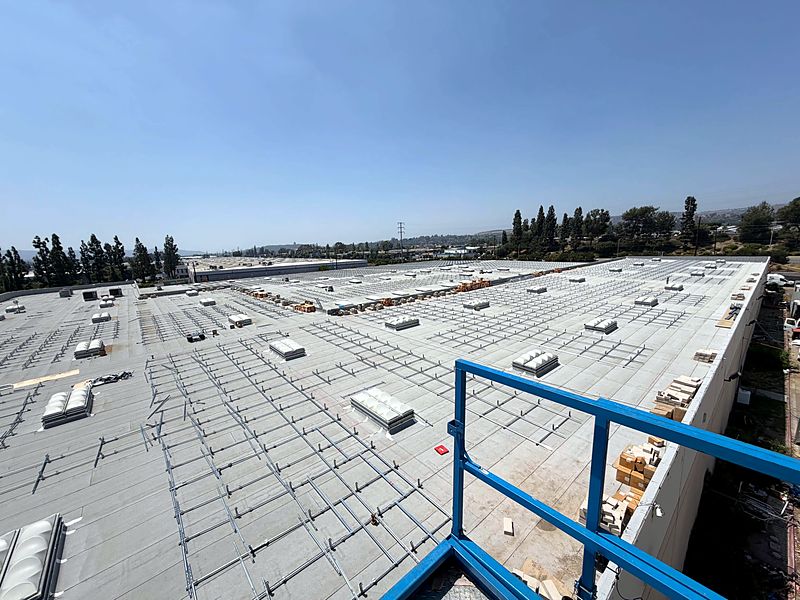
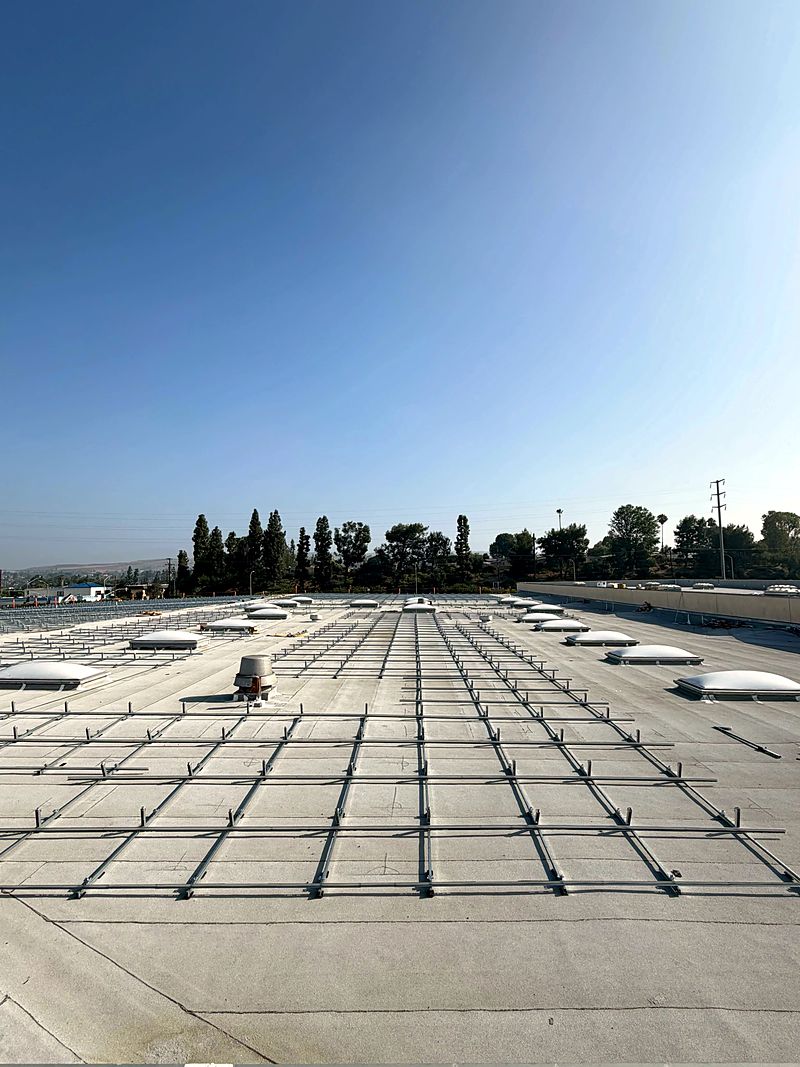
Large, uninterrupted roof planes keep racking simple and cost per watt down, provided the roof has the structural capacity and the life left to carry an array for 25 years.
Surface parking
Where the roof is small, shaded or near the end of its life, a carport over the lot can carry the array instead and give tenants shade. See solar carports.
Daytime load
Offices, light manufacturing and cold storage use most of their power while the sun is up, so more of the output offsets purchased energy at full value.
Fleet and tenant EV charging
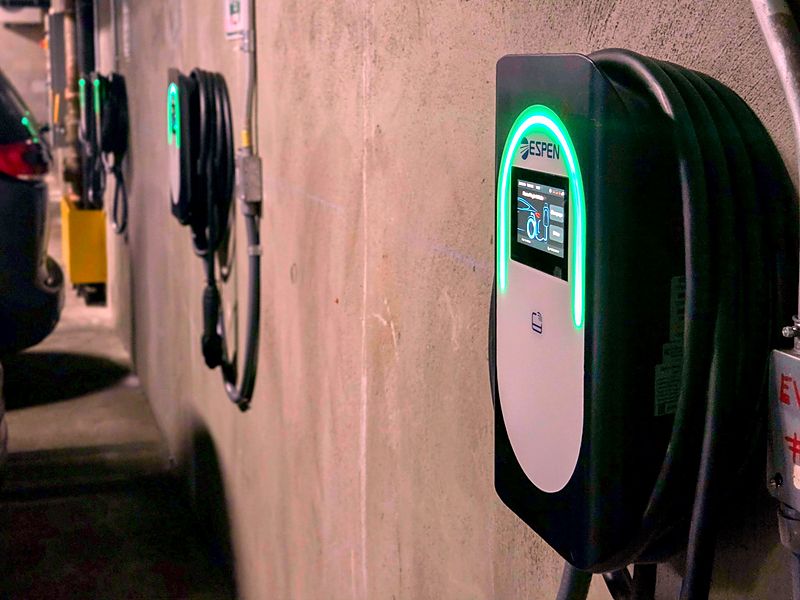
Solar and chargers share the same service and switchgear. Designing them together avoids doing the electrical work twice. See EV charging.
The Valley-specific design problems
Heat
Valley summers are hot, and modules lose efficiency as cell temperature rises. Mounting height, airflow beneath the array and module temperature coefficient matter more here than near the coast, and the production model has to reflect them.
Older electrical service
Many Valley buildings carry original switchgear. Whether the existing service can accept the system, and where the point of interconnection sits, can move a budget more than the panels do. We review the main switchboard during feasibility, not after contract.
Roof life
Putting a 25-year array on a roof with ten years left means paying to remove and reinstall it later. On the Chatsworth project the roof was replaced first, carried by the project economics, and the array went on once. See roofing.
Economics in 2026
For a business owner, the federal picture changed in 2025. The Section 48E credit remains (6% base, 30% for facilities under 1 MW AC or that meet prevailing-wage and apprenticeship rules), but a solar facility that began construction after July 4, 2026 must be placed in service by December 31, 2027. Storage is not subject to that cutoff, and 48E property keeps five-year MACRS depreciation, with 100% bonus depreciation now permanent for qualifying property acquired after January 19, 2025. Our federal tax credit guide explains the beginning-of-construction rules and the June 2026 court decision on IRS Notice 2025-42.
On price, LBNL’s Tracking the Sun reported a 2023 median of $2.3 per watt for large commercial systems in California, before incentives; smaller systems cost more per watt. Our commercial cost guide has the ranges by size. A firm quote depends on the roof, the utility and the timeline.
Not tax or legal advice
Current Energy is a licensed contractor. This page summarises publicly available rules as they stood on October 8, 2026 and is not tax, legal or financial advice. Programs change. Confirm anything that affects a real decision with your CPA, tax counsel or the program administrator.
Valley projects
Van Nuys Airport: 6,569 modules across nine hangar roofs and two carports, about 150,000 square feet of roof, producing 4.5 million kWh a year. Chatsworth commercial building: a Feed-in Tariff project with 3,000 rooftop modules on a 100,000 sq ft building, 324 more on two new carports, eight EV charging stations and a new roof with a 20-year warranty at no cost to the owner. Outside the Valley, Vitco Foods in Ontario put its array on parking canopies over a 123,000 sq ft cold-storage operation.
23 photographs from our own jobs →
Communities we cover
Sylmar, Granada Hills, Northridge, Van Nuys, Sherman Oaks, North Hollywood, Woodland Hills, Reseda, Panorama City, Mission Hills, Pacoima, Chatsworth and the surrounding area, plus Burbank and Glendale. If your address is not listed, call; the boundary is a service radius, not a hard line. For homes and smaller properties in the Valley, see our San Fernando Valley service area page; for apartment owners, EV charging for multifamily properties.
Sources and further reading
- LADWP — EV, Net Energy Metering and REO rates — accessed October 8, 2026
- LADWP — Feed-in Tariff (FiT) Program — accessed October 8, 2026
- LADWP — Solar interconnection requirements — accessed October 8, 2026
- SCE — How Solar Billing Plans work — accessed October 8, 2026
- 26 U.S.C. § 48E — Clean electricity investment credit (Cornell LII) — accessed October 8, 2026
- McGuireWoods — Federal court vacates IRS Notice 2025-42 (June 2026) — accessed October 8, 2026
- IRS — Cost recovery for qualified clean energy facilities, property and technology — accessed October 8, 2026
- Eide Bailly — OBBB energy credit and bonus depreciation changes — accessed October 8, 2026
- Lawrence Berkeley National Laboratory — Tracking the Sun, 2024 Edition (executive summary) — accessed October 8, 2026
Questions we get asked
Which utility serves commercial buildings in the San Fernando Valley?
Most of the Valley inside Los Angeles city limits (Sylmar, Pacoima, Sun Valley, Van Nuys, North Hollywood, Northridge, Chatsworth and neighbouring communities) is LADWP territory. Burbank and Glendale run their own municipal utilities, and areas outside those city limits are generally Southern California Edison. The utility named on your bill decides which rules apply.
Is solar worth it for a Valley warehouse or light-industrial building?
Often, because these buildings tend to have large flat roofs and daytime load. Whether it pays depends on your tariff, the roof's remaining life and how much of the output you use on site. We model it from twelve months of your own bills before recommending anything.
Do Valley summers reduce solar output?
Yes. Photovoltaic modules lose efficiency as cell temperature rises, and inland Valley sites run hotter than the coast. We account for it in the production model through module choice, mounting height and airflow under the array, rather than discovering it in the first August.
Can we sell solar power to LADWP instead of using it?
If the building is on LADWP and the project is at least 30 kW, the Feed-in Tariff lets you sell all output to LADWP under a long-term contract, subject to available program capacity. Our Chatsworth project was built under the FiT.
Is the federal tax credit still available for a project starting now?
For businesses, the Section 48E credit still exists, but a solar facility that began construction after July 4, 2026 must be placed in service by December 31, 2027 to qualify. Battery storage is not subject to that cutoff. Your tax adviser should confirm how it applies to you.
How close is Current Energy to our site?
Our office is at 15823 Monte St, Suite 101, Sylmar, CA 91342, at the north end of the Valley. Most Valley sites are a short drive, which helps during construction and with service afterwards.
Last updated October 2026
A Valley contractor for a Valley building.
Send twelve months of bills and the roof age. We will confirm your utility, model the system on its actual rules and tell you whether it can be in service before the 2027 deadline.