EV charging that your electrical service can actually support
Level 2 and DC fast charging for commercial, multifamily and residential property. We start with the service capacity and the conduit route, because those — not the charger — are what decide the budget and the schedule.
The constraint is never the charger
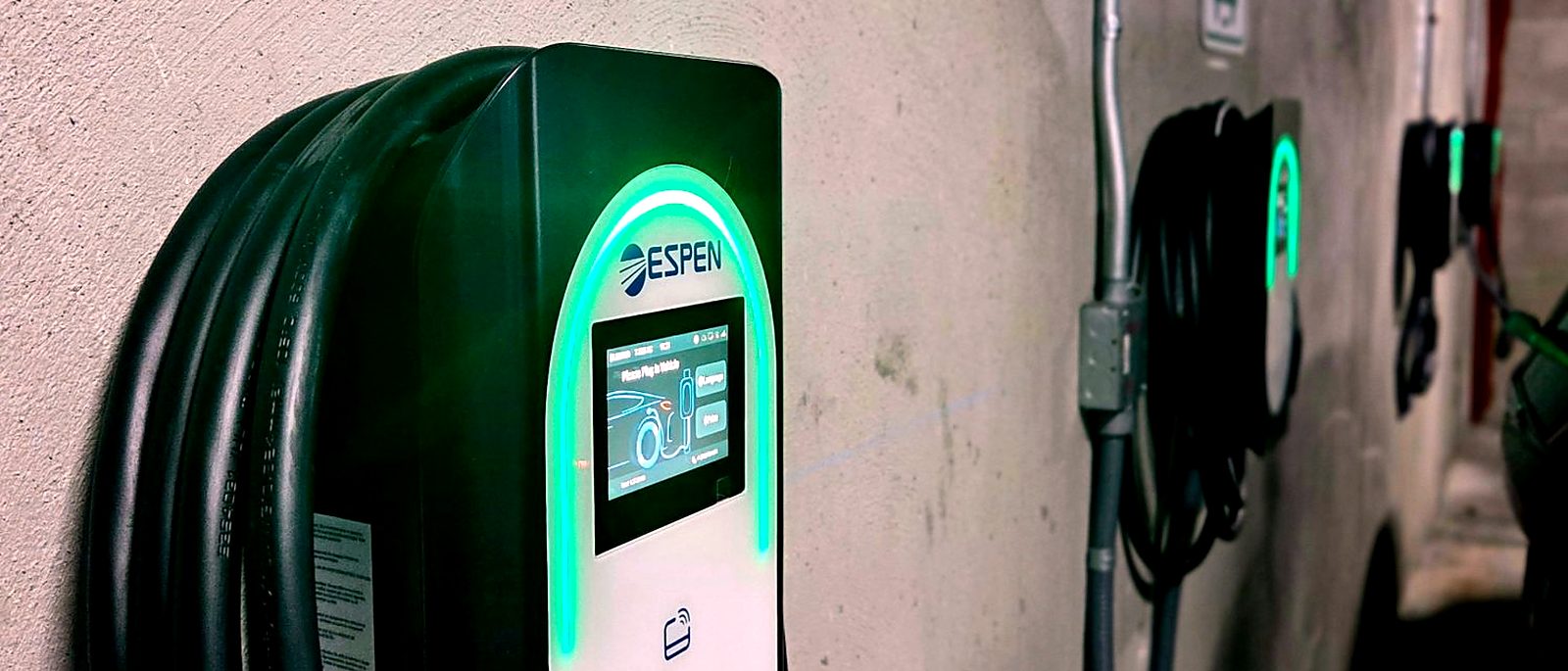
Almost every EV charging conversation starts with equipment choice and almost every EV charging project is actually decided by two other things: how much spare capacity your electrical service has, and how far the conductors have to travel to reach the parking spaces.
We assess those first. It changes the design, the budget and sometimes the answer.
What we install
Level 2 — commercial
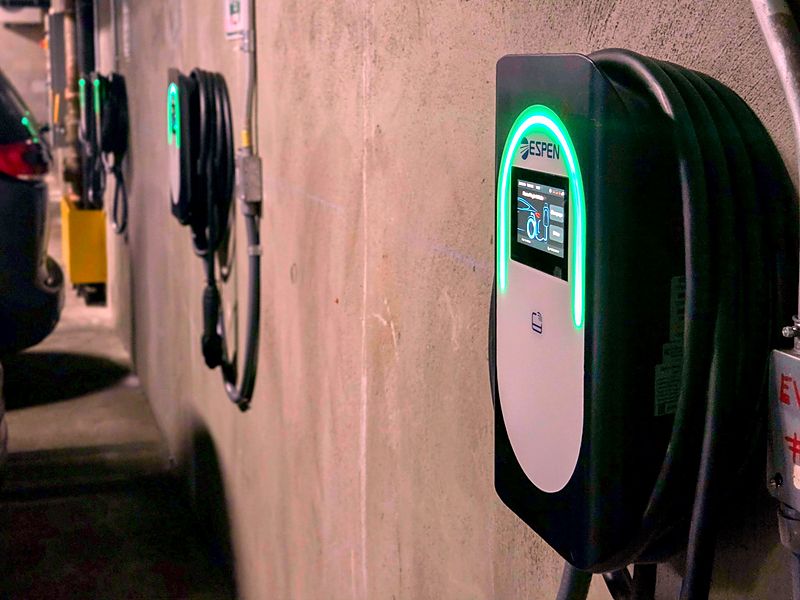
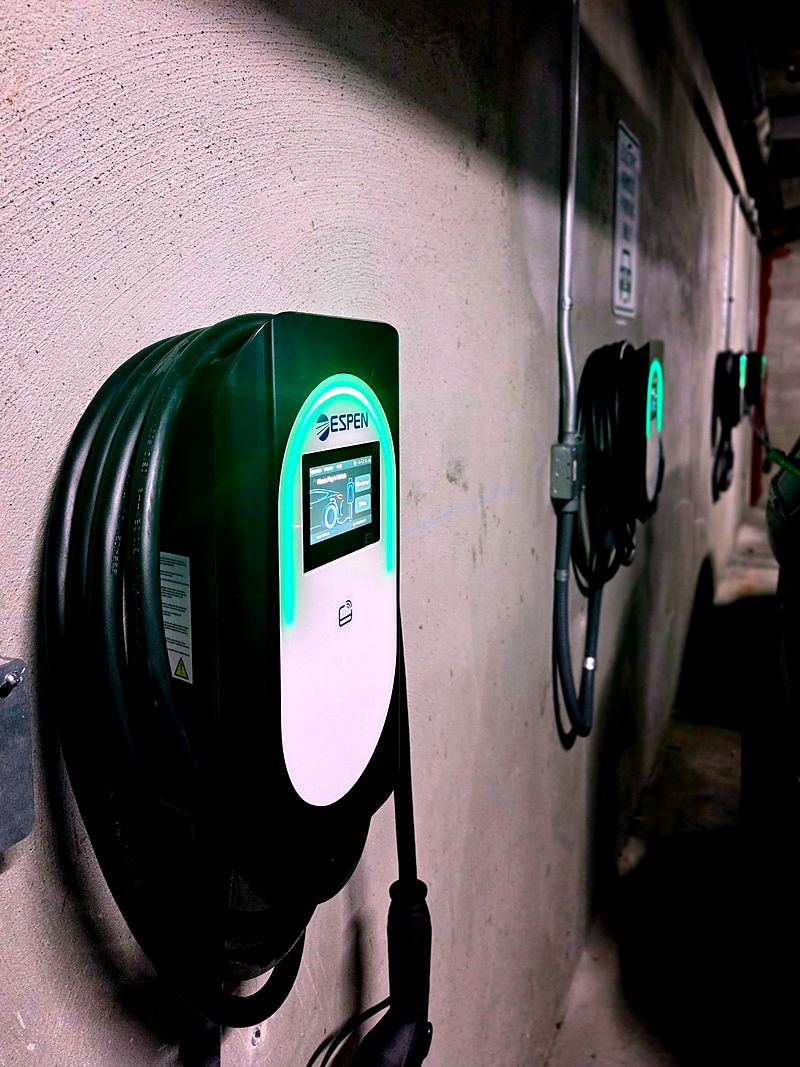
208/240V charging for workplaces, multifamily parking, hotels and retail. Networked or non-networked, with load management, access control and billing where you want them.
DC fast charging
High-power charging for fleet depots, corridor and retail locations. Substantial electrical infrastructure — we scope the utility work honestly before you budget.
Level 2 — residential
Home charging installed properly: correctly sized circuit, permitted, inspected, and coordinated with a panel upgrade if your service needs one.
Choosing between Level 2 and DC fast
| Level 2 | DC fast charging | |
|---|---|---|
| Power supply | 208/240V AC | 480V three-phase, substantial service capacity |
| Charging speed | Range added over hours | Range added in minutes |
| Right for | Workplaces, apartments, hotels, homes — anywhere cars dwell | Fleet depots, retail, corridor sites — anywhere cars pass through |
| Relative equipment cost | Low | High |
| Relative infrastructure cost | Low to moderate; load management often avoids upgrades | High; often requires utility service work and a capacity study |
| Usual schedule driver | Permitting and conduit routing | Utility capacity study and service upgrade |
Load management instead of a service upgrade
If eight chargers are installed as eight dedicated full-capacity circuits, the calculated load will often exceed the building’s service and trigger an upgrade. But eight cars parked overnight do not all need full power simultaneously.
Automatic load management measures available capacity and allocates it dynamically across the chargers. Everyone leaves charged; the service never gets overloaded; the upgrade does not happen. On multifamily and workplace projects this single decision is frequently the difference between a project that proceeds and one that gets shelved on cost.
Design it with the solar, not after
Charging load is new, large, and controllable — three properties that make it an unusually good partner for solar and storage. Workplace charging aligns naturally with midday production. Overnight multifamily charging can be buffered through a battery to avoid a demand spike. Sequencing these as one design costs less than three separate projects, and is why we prefer to look at solar, storage and charging together. For apartment properties, see EV charging for multifamily property managers.
Questions we get asked
What is the difference between Level 2 and DC fast charging?
Level 2 runs on 208/240-volt AC and adds range over hours — the right answer for workplaces, apartments, hotels and homes, where vehicles sit for a long time anyway. DC fast charging converts to DC in the charger itself and delivers range in minutes, which suits retail, fleet depots and corridor locations. DC equipment costs far more, needs far more electrical capacity, and often triggers utility infrastructure work.
Will my electrical service handle chargers?
This is the real question on almost every project, and the answer is frequently ‘not as designed, but yes with load management.’ Automatic load management systems share available capacity between chargers dynamically, which regularly avoids a service upgrade costing more than all the chargers combined. We assess the service before specifying equipment, not after.
How long does a commercial EV charging project take?
The equipment is rarely the constraint. Utility service work, trenching or conduit routing to the parking area, permitting and — for larger installations — a utility capacity study are what set the schedule. We give a realistic timeline that includes those, because the ones that ignore them are the ones that slip.
Can charging be tied to solar and storage?
Yes, and on new projects it should be designed that way from the start. Charging load aligned with solar production, buffered by storage, avoids both expensive grid draw and demand-charge spikes. Retrofitting that coordination later is possible but always costs more than designing it once.
Let’s find out what your building can actually do.
Send twelve months of utility data — or one recent bill — and we will come back with a straight answer, including ‘not yet’ if that is the honest one.