EV charging for apartment and multifamily property managers
Tenant requests, limited electrical capacity and shifting incentives. We plan the whole building once, so the tenth charger is as easy as the first.
Short answer
For Los Angeles apartment owners and property managers, EV charging is now a legal obligation as much as an amenity: California Civil Code § 1947.6 requires landlords to approve compliant tenant requests for chargers in most buildings. The practical questions are electrical capacity, load management, who pays and how you recover costs. Incentives are in flux in October 2026: LADWP’s commercial charger rebate is reopening with revised terms, SCE’s Charge Ready portal has closed, and the federal 30C credit ended for chargers placed in service after June 30, 2026.
On this page
What California law requires
Civil Code § 1947.6 applies to any residential lease executed, extended or renewed on or after July 1, 2015. If a tenant submits a written request that meets the statute’s terms and follows your approval process for modifications, you must approve installation of a charging station at the tenant’s allotted space.
| Topic | What the statute says |
|---|---|
| Who it covers | Lessors of dwellings, for leases executed, extended or renewed on or after July 1, 2015 |
| Exemptions | Chargers already serve 10% or more of designated spaces; parking not provided in the lease; fewer than five parking spaces; certain rent-controlled dwellings (the rent-control exemption does not apply to leases executed, extended or renewed on or after January 1, 2019) |
| Tenant pays | Your costs of installing the station and its infrastructure, paid before work starts; electricity used; damage, maintenance, repair, removal and replacement |
| Your rights | Set requirements for installation, use, maintenance and removal; require a financial analysis and scope of work; charge rent for a parking space the charger effectively reserves; no duty to provide an extra space |
| Insurance | Tenant liability coverage up to 10 times annual rent, unless the station is NRTL-certified and the work is done by a licensed electrician |
A building-wide plan usually beats approving one-off requests as they arrive. Each individual install takes a slice of the same service capacity, and the fifth request is much harder to accommodate than the first.
Start with capacity, not chargers
The charger is rarely the expensive part. The service capacity, the switchgear and the conduit route from the electrical room to the parking are what decide the budget and the schedule.
Load study first
We measure what the existing service actually carries before deciding how many ports it can support, and whether an upgrade is needed at all.
Load management
Managed chargers share available power across ports, so a building can serve more cars without sizing every circuit for full output. LADWP’s prior rebate terms allowed dynamic load management with a minimum of 8 amps per vehicle.
Utility review
New charging load can require utility upgrades. LADWP evaluates this through a Customer Submittal Package to its EV Service Design Group, which can be submitted year-round.
Garage and conduit routing
Parking structures, podium garages and surface lots each route differently. Core drilling, fire separation and trench length all show up in the price.
Older buildings may need more electrical capacity first. Our electrical panel upgrade work covers service changes, and panel upgrade cost in Los Angeles explains the LADBS and LADWP steps.
Amenity chargers versus assigned chargers
| Layout | Best for | Watch for |
|---|---|---|
| Shared amenity chargers | Unassigned parking, guest areas, buildings starting small | Turnover etiquette; networked billing or access control |
| Assigned chargers at allotted spaces | Residents who park in the same space nightly; tenant requests under § 1947.6 | Capacity planning across the whole garage, not one space at a time |
| EV-ready circuits for later | Phased programs and future demand | Conduit and panel space reserved during the first phase |
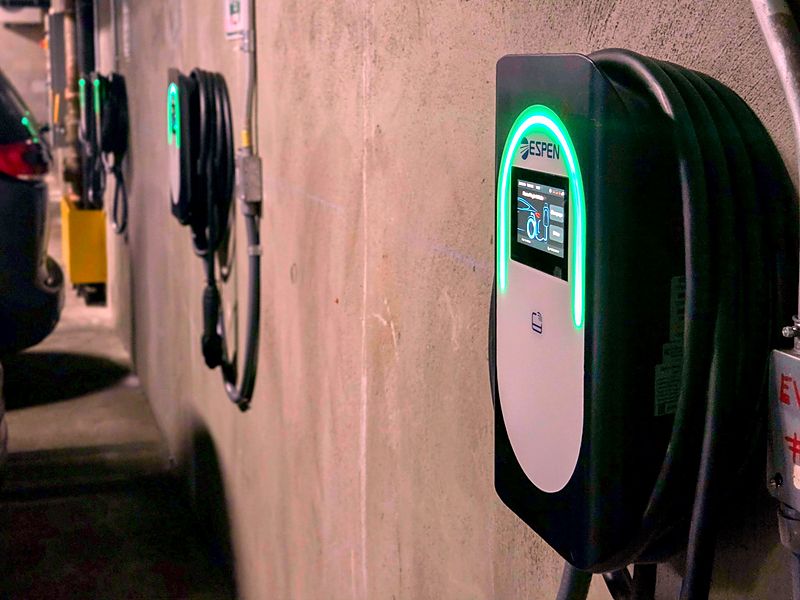
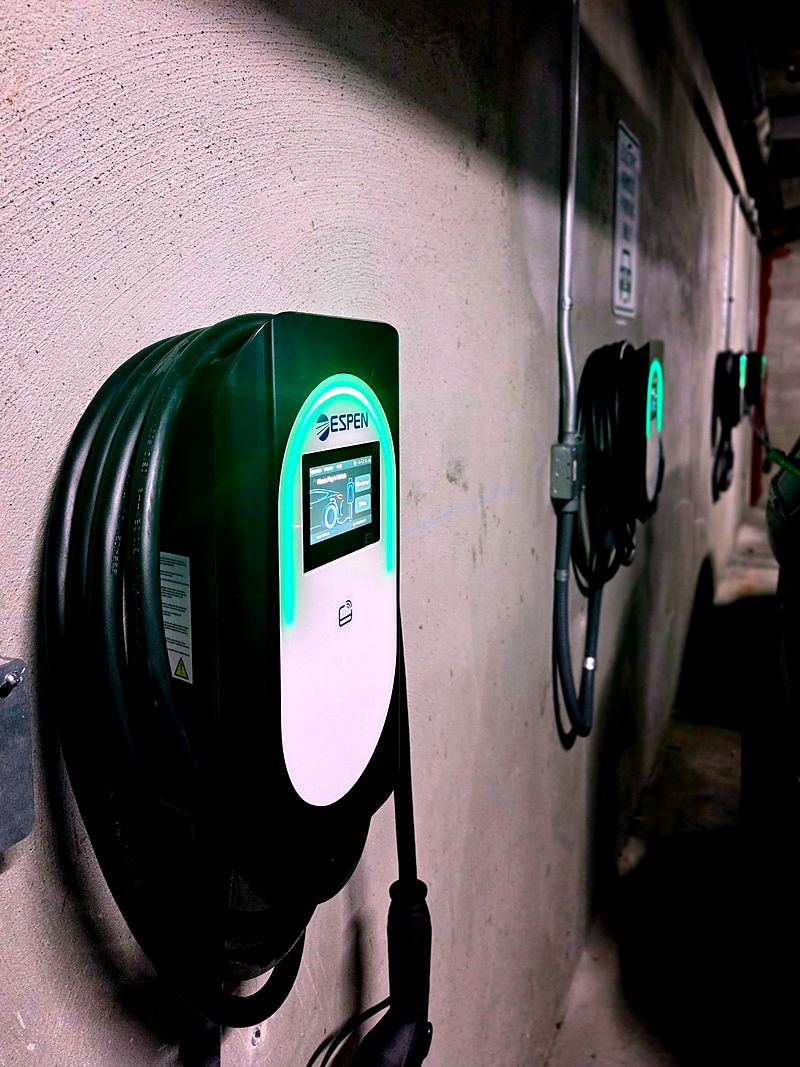
Cost recovery is a policy decision: some owners include charging as an amenity, others bill by session or kWh through networked chargers, and § 1947.6 lets you pass tenant-requested costs to the tenant. The chargers shown in our published project photos are ESPEN Level 2 units installed in a parking garage; equipment and billing are chosen per property.
Incentives in October 2026
| Program | Status | Notes |
|---|---|---|
| LADWP Commercial EV Charger Rebate | Closed; enrollment planned for October 2026 with revised terms | Previous terms: up to $5,000 per Level 2 charger in a disadvantaged community, $4,000 elsewhere; minimum 6.2 kW; one per parking space; up to 80 per premises; five-year in-service requirement |
| SCE Charge Ready (light-duty) | Application portal closed June 30, 2026 | Under CPUC decision D.25-12-005; existing participants’ agreements due by December 31, 2026 |
| Federal 30C credit | Ended for property placed in service after June 30, 2026 | Per IRS guidance under Public Law 119-21 |
If LADWP reopens on terms similar to the last round, a property that has its load study, design and Customer Submittal Package ready will be first in line.
Not tax or legal advice
Current Energy is a licensed contractor. This page summarises publicly available rules as they stood on October 8, 2026 and is not tax, legal or financial advice. Programs change. Confirm anything that affects a real decision with your CPA, tax counsel or the program administrator.
How a multifamily EV project runs
- Site walk and load study. Electrical rooms, service size, garage layout and parking assignments.
- Program design. Number of ports now and later, load management settings, billing and access approach.
- Utility and permit. LADWP or SCE capacity review, LADBS or local permits.
- Install and commission. Our own licensed crews, then network activation and handover to your management team.
- Tenant requests. A standard process for § 1947.6 requests that fits the building plan instead of fighting it.
Our EV work
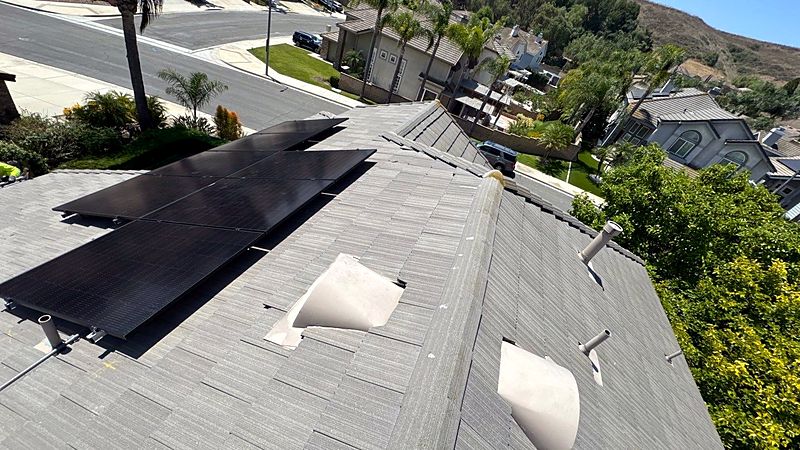
We installed eight EV charging stations as part of the Chatsworth commercial building project, alongside rooftop and carport solar, and have installed Level 2 chargers in parking garages like the ones below. We also build multifamily and HOA solar and solar carports, which can put generation directly over the spaces you are electrifying.
23 photographs from our own jobs →
For homeowners, our blog post on Level 2 EV charger installation covers the basics.
Sources and further reading
- California Civil Code § 1947.6 — EV charging stations for residential tenants — accessed October 8, 2026
- LADWP — Commercial EV Charger Rebate Program (last updated August 13, 2026) — accessed October 8, 2026
- SCE — Charge Ready Light-Duty program — accessed October 8, 2026
- IRS — Alternative fuel vehicle refueling property credit (30C) — accessed October 8, 2026
- IRS — FAQs for modification of sections 25C, 25D, 25E, 30C, 30D, 45L, 45W and 179D under Public Law 119-21 (OBBB) — accessed October 8, 2026
Questions we get asked
Do I have to let a tenant install an EV charger?
In most cases, yes. Under California Civil Code § 1947.6, for leases executed, extended or renewed on or after July 1, 2015, a landlord must approve a tenant’s written request to install a charging station at the tenant’s allotted parking space if the request meets the statute’s requirements and follows your procedural approval process. Exceptions include properties with fewer than five parking spaces, leases without parking, and properties where chargers already serve at least 10% of designated spaces.
Who pays for a tenant-requested charger?
Under § 1947.6 the tenant agrees in writing to pay the landlord’s costs of installing the station and its infrastructure before work starts, plus the electricity it uses and the cost of damage, maintenance, repair, removal and replacement. The landlord does not have to provide an extra parking space.
Is there an LADWP rebate for apartment EV chargers right now?
Not at this moment. LADWP’s Commercial EV Charger Rebate Program is closed to applications, with a new enrollment planned for October 2026 under revised terms, amounts and documentation. Its previous terms paid up to $5,000 per Level 2 charger in a disadvantaged community and $4,000 elsewhere, one per parking space for tenants, employees, customers or the public. Do not budget on those figures until LADWP publishes the new terms.
Can I still claim the federal 30C charger credit?
Not for new chargers. According to the IRS, the Section 30C credit does not apply to property placed in service after June 30, 2026.
Will my building need a service upgrade?
Not necessarily. Many buildings can add a meaningful number of Level 2 ports by using load management, which shares available capacity across chargers instead of sizing for every car at full power. We start with a load study and your utility’s review before recommending an upgrade. In LADWP territory you can submit plans to the EV Service Design Group year-round.
Shared amenity chargers or assigned chargers?
Shared chargers in a common area serve more residents per port and keep billing simple; assigned chargers at deeded or allotted spaces suit buildings where residents park in the same space every night. Many properties do both. The right mix depends on parking layout, electrical rooms and how you want to recover costs.
Can solar on the building offset charging costs?
It can offset common-area electricity, which is often where shared chargers are metered. See our multifamily solar page for how that works under LADWP and SCE rules.
Last updated October 2026
One plan for every charger your building will need.
Send the address, the number of parking spaces and a photo of the main electrical room. We will tell you how many ports the existing service can support and what it costs to go further.