Heat Pump vs. Tankless Water Heaters: Which Is Better for Your Home?
How heat pump and tankless water heaters compare on running cost, hot water recovery, space and venting, and which one suits a Southern California home.
On this page
- What Is a Heat Pump Water Heater?
- What Is a Tankless Water Heater?
- What Is the Main Difference?
- Energy Efficiency
- Hot-Water Supply
- Installation Space
- Electrical and Gas Requirements
- Comfort and Household Experience
- Maintenance Requirements
- Which Option Works Better With Solar?
- Are Rebates Available for Both Options?
- Heat Pump Water Heater Advantages
- Tankless Water Heater Advantages
- Which Water Heater Is Right for You?
- Compare Your Options With Current Energy
Choosing a new water heater involves more than replacing an old appliance. The right system can lower energy consumption, provide reliable hot water, improve comfort, and help prepare your home for future energy upgrades.
Two popular energy-efficient options are heat pump water heaters and tankless water heaters. Both can offer meaningful advantages over older conventional systems, but they operate differently and are better suited to different homes.
Understanding the differences can help you choose a water heater based on your household’s hot-water demand, available installation space, existing utilities, budget, and long-term energy goals.
What Is a Heat Pump Water Heater?
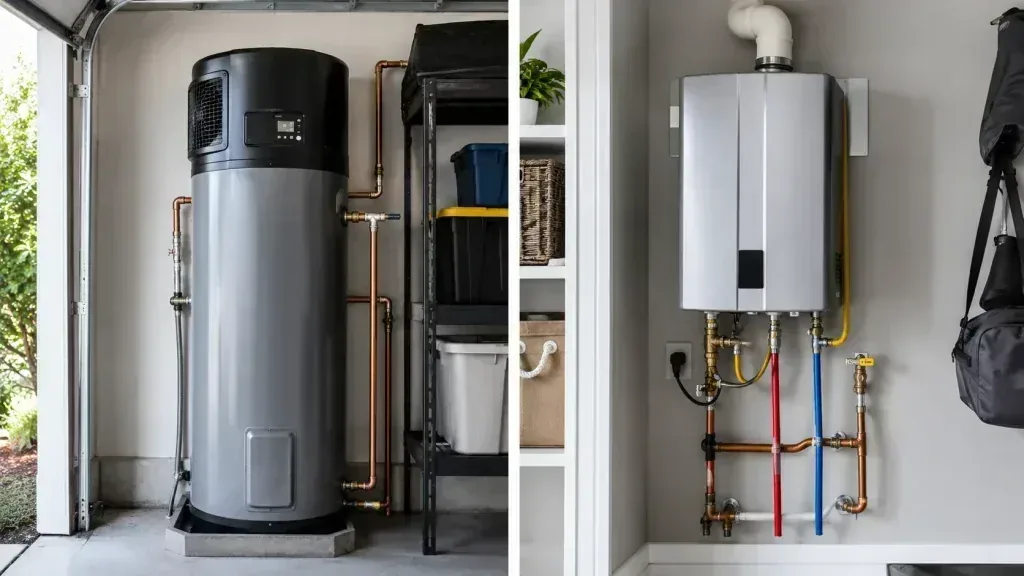
A heat pump water heater is an electric storage water heater that transfers heat from the surrounding air into the water inside its tank.
Instead of creating all its heat through electric resistance, the system collects existing heat from the air and moves it into the water. This allows it to use significantly less electricity than a standard electric water heater.
Many heat pump water heaters are also called hybrid water heaters because they include backup electric heating elements. During periods of unusually high hot-water demand, the system can use these elements to help heat the water more quickly.
Homeowners can usually select different operating settings, including:
- Energy-saver mode
- Hybrid mode
- High-demand mode
- Electric-only mode
- Vacation mode
This flexibility allows the homeowner to prioritize maximum efficiency or faster recovery depending on the household’s needs.
ENERGY STAR explains that heat pump water heaters transfer heat instead of generating it directly, which is the main reason they can operate so efficiently.
What Is a Tankless Water Heater?
A tankless water heater heats water as it is needed rather than storing a large supply of hot water in a tank.
When someone turns on a hot-water faucet, cold water moves through the unit. A burner or electric heating element activates and heats the water before it travels to the faucet, shower, dishwasher, or appliance.
Because the system does not continually maintain a tank of hot water, it reduces standby energy losses.
Whole-home tankless systems are commonly powered by natural gas, although electric tankless systems are also available. The right option depends on the property’s gas service, electrical capacity, water demand, and installation requirements.
ENERGY STAR-certified gas tankless water heaters can improve efficiency further by using condensing technology to recover additional heat from combustion gases.
What Is the Main Difference?
The biggest difference is how the two systems provide hot water.
A heat pump water heater stores hot water in an insulated tank. It heats that water gradually and keeps it available until the household needs it.
A tankless water heater does not store a large amount of water. Instead, it heats water continuously as it passes through the equipment.
This difference affects the installation, hot-water delivery, energy source, maintenance requirements, and overall customer experience.
Energy Efficiency
Both systems can be more energy-efficient than older conventional water heaters, but they achieve efficiency in different ways.
A heat pump water heater saves energy by transferring existing heat from the surrounding air. According to ENERGY STAR, qualifying heat pump models can use around 70% less energy than standard electric resistance water heaters.
A tankless water heater saves energy by eliminating much of the standby heat loss associated with keeping a storage tank hot throughout the day.
A high-efficiency condensing gas tankless system can use less energy than a conventional gas tank water heater. However, actual savings depend on the equipment efficiency, household usage, fuel rates, installation quality, and hot-water habits.
For homeowners focused on electrification, solar compatibility, and reducing onsite fossil-fuel use, a heat pump water heater will often be the stronger choice.
For homeowners replacing an existing gas water heater who want continuous hot-water delivery and a compact design, a high-efficiency gas tankless system may be a practical option.
Hot-Water Supply
A properly sized tankless water heater can provide continuous hot water because it heats the water as long as demand remains within the unit’s capacity.
This can be useful for households that regularly take several showers one after another or use large quantities of hot water over extended periods.
However, tankless does not mean unlimited hot water under every condition. Each unit has a maximum flow rate. Running multiple showers, faucets, and appliances at the same time can exceed that capacity.
A heat pump water heater provides a stored supply of hot water. Once the tank is depleted, the system needs time to heat another supply.
Choosing the correct tank size is therefore important. A larger tank can support periods of heavier household demand while allowing the system to operate primarily in its efficient heat-pump mode.
Household size, number of bathrooms, shower habits, laundry use, dishwasher use, and peak demand should all be considered before selecting either system.
Installation Space
A tankless water heater has a compact design and can often be mounted on a wall. This may free up floor space previously occupied by a storage tank.
However, the installation may still require:
- Updated gas piping
- Specialized venting
- A condensate drain
- Water-line modifications
- Electrical power for controls
- Exterior wall access
- Permit and code compliance
A heat pump water heater occupies space similar to a conventional storage water heater. It also needs enough surrounding air to operate efficiently or an approved ducting configuration.
Garages, utility rooms, and other open areas may be suitable installation locations. Small enclosed closets may require additional planning or may not be appropriate for certain models.
Heat pump systems also produce condensate, so a suitable drain or condensate pump is generally required.
Electrical and Gas Requirements
A heat pump water heater operates on electricity. Depending on the model and the property, installation may require:
- A dedicated electrical circuit
- Wiring modifications
- A load calculation
- Electrical-panel improvements
- A main panel upgrade
Some newer heat pump water heaters are designed for installation on lower-amperage circuits, but equipment requirements vary.
A gas tankless water heater may require a larger gas line because it needs to produce a substantial amount of heat within a short period. The existing gas supply and meter must be evaluated to determine whether they can support the unit.
The venting requirements may also differ from those of the existing gas storage water heater.
A professional property assessment helps identify these requirements before equipment is selected.
Comfort and Household Experience
Heat pump water heaters and tankless systems also feel different during everyday use.
A heat pump water heater behaves like a traditional tank system. Hot water is already stored and ready to use. However, recovery may be slower when operating exclusively in the most efficient mode.
A tankless system produces hot water on demand. There may be a brief delay before heated water reaches the fixture, although the distance between the water heater and the faucet also affects waiting time.
A recirculation system may reduce wait times, but it should be designed and controlled carefully to avoid unnecessary energy consumption.
Some tankless systems also require a minimum flow before the burner activates. This can affect very low-flow uses depending on the equipment.
Maintenance Requirements
Both systems should receive regular maintenance.
Heat pump water heater maintenance may include:
- Cleaning or replacing the air filter
- Inspecting the condensate drain
- Checking the temperature and pressure relief valve
- Flushing sediment from the tank
- Inspecting electrical connections
- Following manufacturer maintenance instructions
Tankless maintenance may include:
- Flushing mineral buildup from the heat exchanger
- Cleaning inlet filters
- Inspecting the burner and ignition system
- Checking condensate drainage
- Inspecting the venting system
- Checking for water or gas leaks
Homes with hard water may require more frequent maintenance or additional water-treatment measures.
Regular servicing can help preserve efficiency, improve reliability, and extend equipment life.
Which Option Works Better With Solar?
A heat pump water heater is generally the more direct match for a home with solar panels because it operates on electricity.
The system may be scheduled to heat water during periods when the solar panels are producing more electricity. In this way, the water tank can act as a form of thermal storage by holding heated water for use later.
A solar battery may provide additional flexibility by storing excess electricity for evening or nighttime use.
A gas tankless water heater can still reduce energy waste compared with an older gas storage system, but it does not directly use electricity generated by rooftop solar for its primary heating function.
Homeowners planning a broader move toward electric appliances may therefore prefer a heat pump water heater.
Are Rebates Available for Both Options?
Rebates, financing programs, manufacturer promotions, utility incentives, and tax benefits may be available for qualifying energy-efficient water heaters.
Heat pump water heaters have historically been supported by electrification and energy-efficiency programs. However, funding levels and program availability can change. For example, TECH Clean California currently reports that its statewide single-family heat pump water-heater incentives are fully reserved.
Qualifying high-efficiency gas tankless water heaters may also be eligible for utility rebates. SoCalGas currently states that customers may still access qualifying tankless rebates through an installation package or a post-purchase rebate process, although its direct-buy option is temporarily paused.
Rebate eligibility may depend on:
- Property location
- Utility provider
- Existing water-heater type
- Equipment efficiency rating
- Product certification
- Household income
- Installation date
- Contractor requirements
- Available program funding
- Submission of required documentation
Because programs can change or become fully reserved, homeowners should verify current availability before purchasing equipment. A rebate should not be considered guaranteed until eligibility has been confirmed.
Heat Pump Water Heater Advantages
A heat pump water heater may be a good fit when the homeowner wants:
- Very high electrical efficiency
- Compatibility with rooftop solar
- Reduced reliance on natural gas
- A stored supply of hot water
- Smart controls and scheduling
- Long-term household electrification
- Potential access to electrification incentives
- Mild dehumidification in a garage or utility area
The home must have a suitable installation location, adequate airflow, condensate drainage, and sufficient electrical capacity.
Tankless Water Heater Advantages
A tankless system may be a good fit when the homeowner wants:
- A compact wall-mounted system
- Continuous hot water within the unit’s rated capacity
- Reduced standby energy loss
- Replacement of an existing gas water heater
- Additional usable floor space
- High-efficiency condensing technology
- Potential access to qualifying utility rebates
The property must have suitable gas or electrical capacity, proper venting, drainage, water connections, and adequate equipment sizing.
Which Water Heater Is Right for You?
There is no single water heater that is best for every home.
A heat pump water heater may offer greater overall energy efficiency and stronger compatibility with solar and property electrification.
A tankless water heater may be attractive for customers who value continuous hot-water delivery, compact installation, and an efficient replacement for an existing gas system.
The correct decision should be based on:
- Household hot-water demand
- Existing water-heater fuel
- Available installation space
- Electrical-panel capacity
- Gas-line capacity
- Local utility rates
- Solar ownership or future solar plans
- Upfront installation cost
- Available incentives
- Long-term energy goals
Compare Your Options With Current Energy
Current Energy helps Southern California homeowners compare heat pump and tankless water heaters based on the needs of the entire property.
Our team can evaluate your household’s hot-water demand, installation space, electrical capacity, gas infrastructure, solar system, and potential rebate options before recommending equipment.
Because Current Energy also provides solar panels, battery storage, electrical-panel upgrades, HVAC systems, EV charging, and other energy improvements, we can help ensure your new water heater supports both your immediate needs and your long-term property plans.
Contact Current Energy to schedule an assessment and determine whether a heat pump or tankless water heater is the better energy-efficient choice for your home.
Published July 30, 2026
More from the blog
 HVACHow a High-Efficiency HVAC System Can Lower Energy Costs and Improve ComfortWhat actually makes an HVAC system efficient, why sizing and installation matter more than the label on the box, and when replacing yours is worth it.Read the post
 EV chargingLevel 2 EV Charger Installation: What Homeowners and Property Managers Should KnowWhat a Level 2 EV charger installation involves at a home or a managed property: electrical capacity, panel load, permitting, and what drives the cost.Read the post
 Battery storageSolar Battery Storage in California: Is It Worth It for Your Home?Under NEM 3.0 the value of solar moved to what you store and use yourself. When home battery storage pays in California, and when it does not.Read the post
Want this looked at on your own building?
One conversation and a recent bill is usually enough to tell you whether the numbers work.