Home solar that pays under NEM 3.0 — sized for your roof and bill
The federal residential credit ended after 2025 and NEM 3.0 changed what exported power is worth. Both facts change what a good home system looks like. We design around them instead of around a brochure — and we do the roof, panel and charger too.
Rated 4.8★ on Google from 33 reviews · CSLB #1074466 · In-house crews · Free assessment, no obligation
What changed for homeowners, plainly
Two things moved, and both matter more than which panel brand you pick.
First, the federal residential credit ended for systems placed in service after December 31, 2025. A homeowner buying a system outright in 2026 does not claim a 30% federal credit. Third-party ownership — a lease or a power purchase agreement — is the remaining route by which that federal value reaches a residential project at all, priced into your rate by the system’s owner.
Second, NEM 3.0 changed what your surplus is worth. Exports are credited at hourly values; SCE’s 2026 averages run from about $0.03 to $0.21 per kWh by season and hour; using it yourself saves you the full retail rate. Which is why a system designed for 2019 economics is the wrong system today.
What a home system costs in Los Angeles in 2026 is in our home solar cost guide.
We would rather you heard this from us in the first conversation than from your accountant in April.
What we do for homes
Solar
Sized to your consumption pattern and tariff, not to the available roof area. Shading modelled, production estimated with degradation stated.
Battery storage
Evening self-supply and backup for the circuits that matter. The piece that makes NEM 3.0 work. More
Roofing
Assessed before design and replaced first when it needs to be, so the array only goes up once. More
Panel upgrades
Service and panel capacity for solar, storage, EV charging and heat pumps. More
HVAC and heat pumps
Right-sized replacement, because an oversized system costs more and delivers less comfort. More
Home EV charging
Level 2 charging installed on a properly sized, permitted circuit. More
How we size a home system
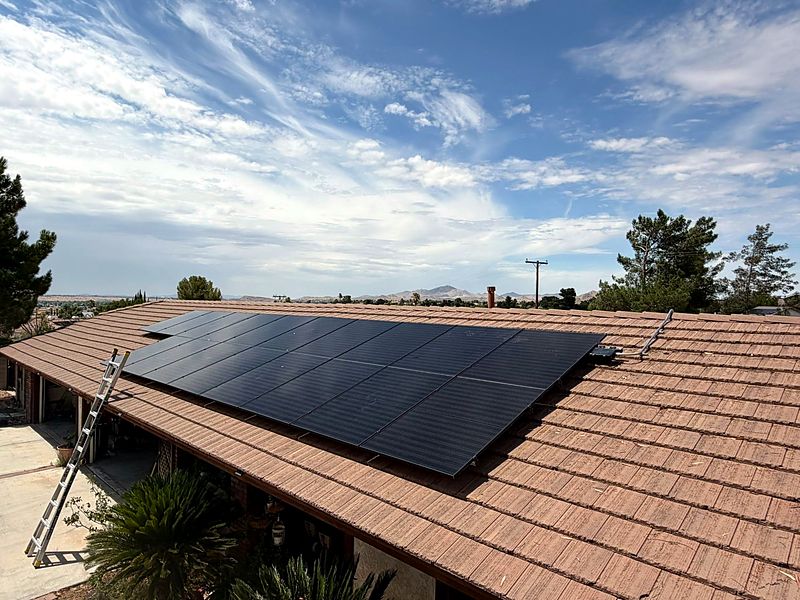
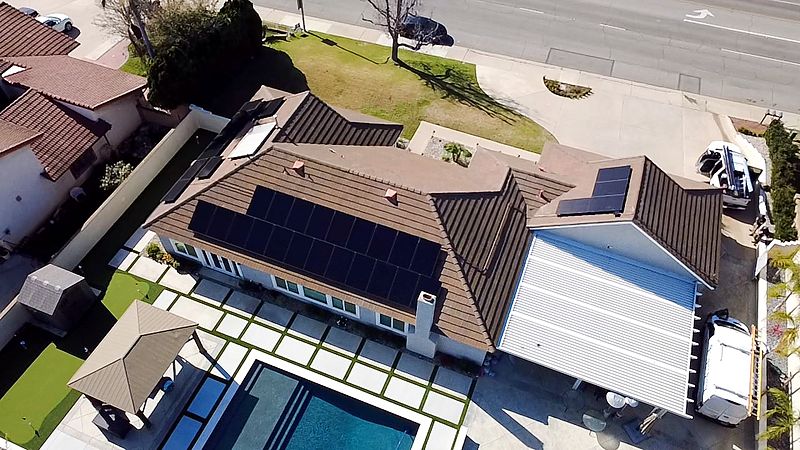
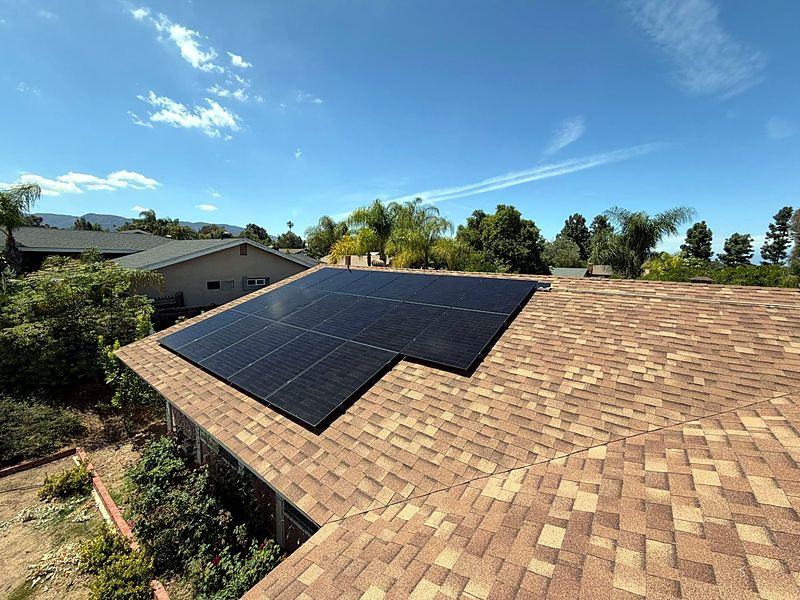
Most residential proposals start from a twelve-month kWh total and a roof photo. That produces an array which is close to correct on annual energy and wrong on when that energy arrives — which, under a time-of-use tariff, is the part that determines your bill.
We work from your rate schedule and your hourly usage pattern. Then we model three scenarios: solar only, solar with storage, and doing nothing. If the third one wins on your numbers, we will say so — we would rather lose a job than install a system you resent in year three.
One licence, one accountable contractor
Roof, panel, array, HVAC and charger are usually four different companies with four different warranties and one shared habit of pointing at each other. Ours are on one California contractor’s licence, #1074466. The practical effect is that sequencing is designed rather than negotiated, and there is one number to call when something needs attention.
Questions we get asked
Is there still a federal tax credit for homeowners in 2026?
Not for a system you buy yourself. The Section 25D residential clean energy credit ended for systems placed in service after December 31, 2025. What still exists is the commercial-side credit, which a third-party owner in a lease or power purchase agreement may claim and price into your rate — you do not claim it, and the benefit reaches you only indirectly. Anyone telling you that you personally still get 30% back on a cash purchase in 2026 is describing the old rules. Full detail on our 2026 tax credit page.
Does solar still make sense under NEM 3.0?
Yes, but the design changed. Because exported energy earns roughly four to eight cents per kWh while energy you use offsets your full retail rate, the goal is to consume your own production rather than sell it. That usually means a battery, and it means sizing the array to your actual pattern of use rather than to your roof. See NEM 3.0 explained.
How do I know if my roof is ready?
Rule of thumb: if your roof has less than about ten years of life left, replace it first. Removing and reinstalling an array later typically costs thousands and can compromise the roofing warranty. We assess roof condition as part of the solar consultation rather than leaving you to find out afterwards — and we do the roofing, so there is nobody to blame sideways. See roofing.
Will I need an electrical panel upgrade?
Sometimes. Older Los Angeles housing stock often has 100-amp service and a panel with no spare capacity, and adding solar, a battery, an EV charger or a heat pump can exceed what it can safely carry. Sometimes a line-side tap or load management avoids the upgrade entirely. We check this before designing, not on installation day. See panel upgrades.
A free assessment, and a straight answer about whether to do it at all.
We will model solar, solar plus storage, and doing nothing — using your actual rate plan — and tell you which one we would choose if it were our house.