Water heaters installed right — tankless, heat-pump, or tank
Permitted, vented, and seismically strapped — sized for your fuel, your space, and whether solar can run it.
Rated 4.8★ on Google from 33 reviews · CSLB #1074466 · In-house crews · Free assessment, no obligation
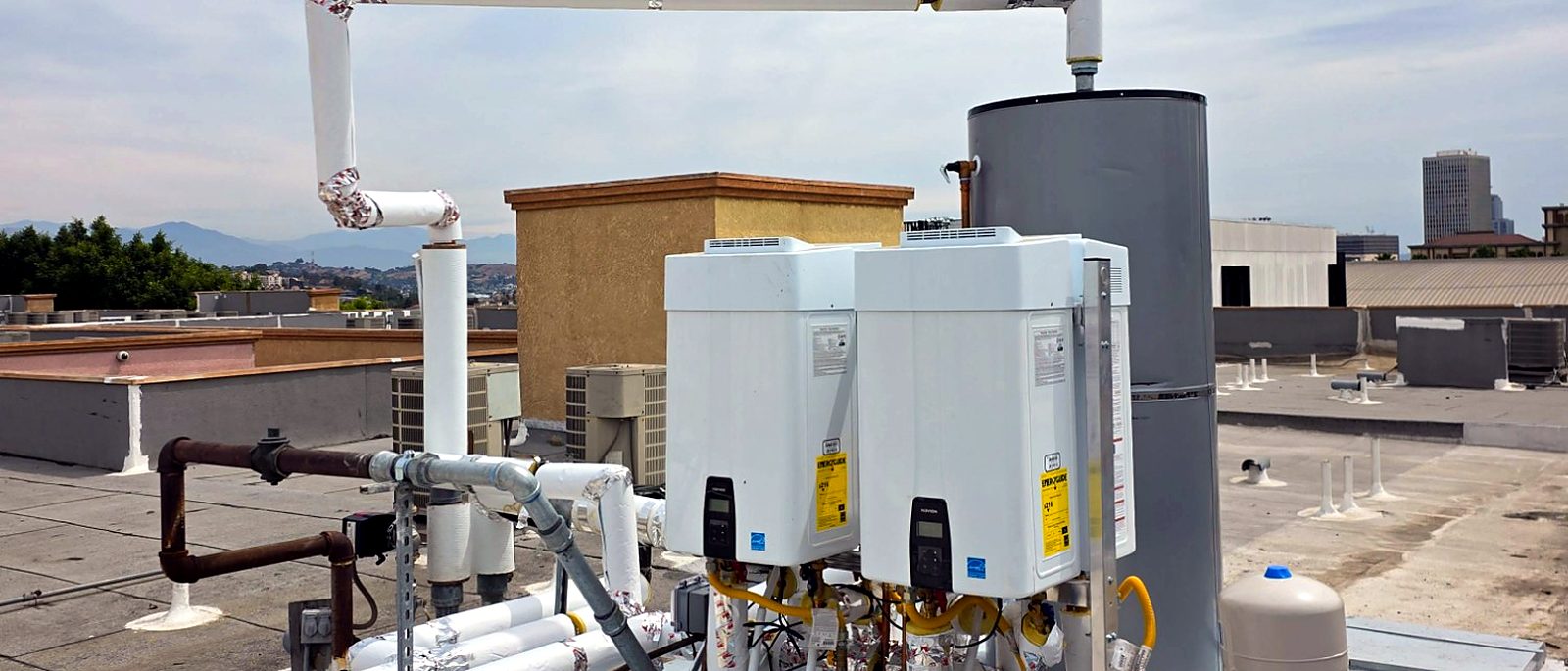
Choosing between the options
| Tankless (gas) | Heat-pump (electric) | Conventional tank | |
|---|---|---|---|
| Hot water supply | Continuous, no tank to run out | Tank storage, high recovery efficiency | Tank storage, limited by tank size |
| Efficiency | High for gas | Highest of any electric option | Lowest |
| Space | Wall-mounted, compact | Needs air volume and clearance | Standard tank footprint |
| Works with solar | No — it burns gas | Yes, and can be scheduled to run on midday production | Only if electric |
| Main constraint | Gas line sizing and venting | Location, air volume and an electrical circuit | Efficiency and standby loss |
What we install
Tankless gas, heat-pump water heaters, and conventional tank replacement — residential and light commercial. Every installation is permitted, correctly vented, seismically strapped to California requirements and inspected.
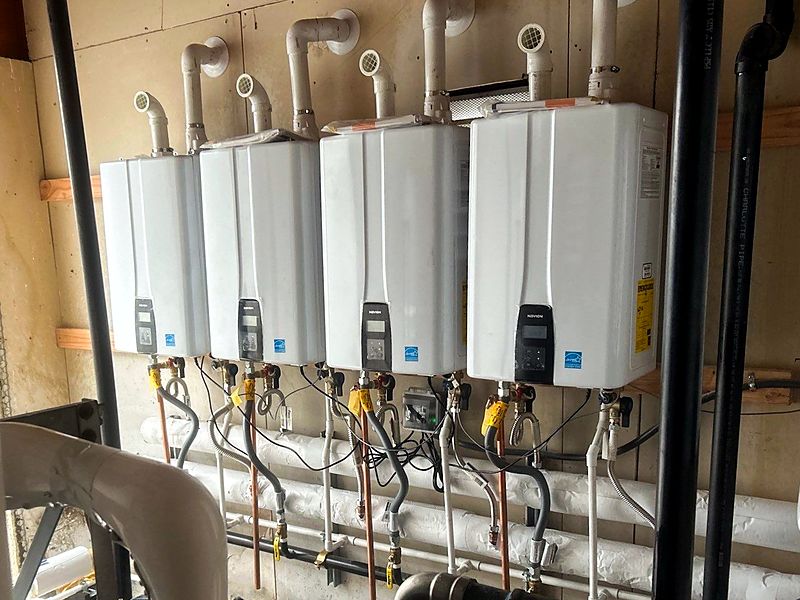
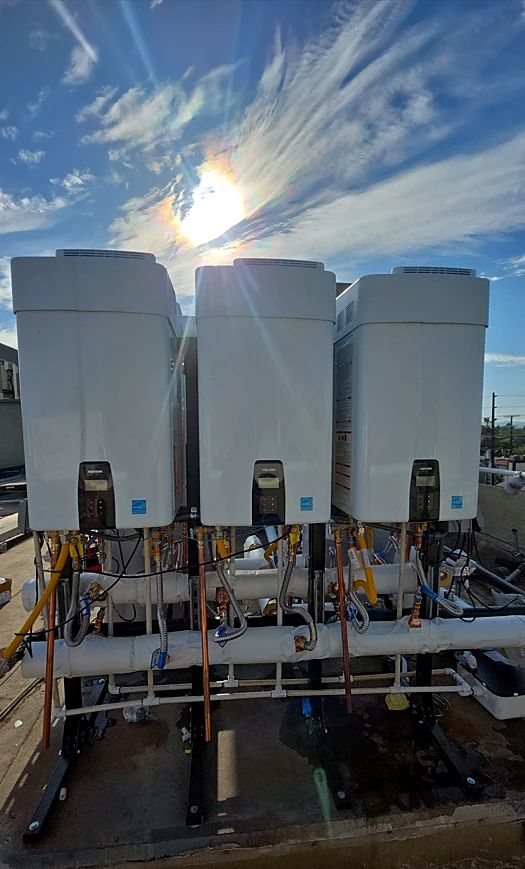
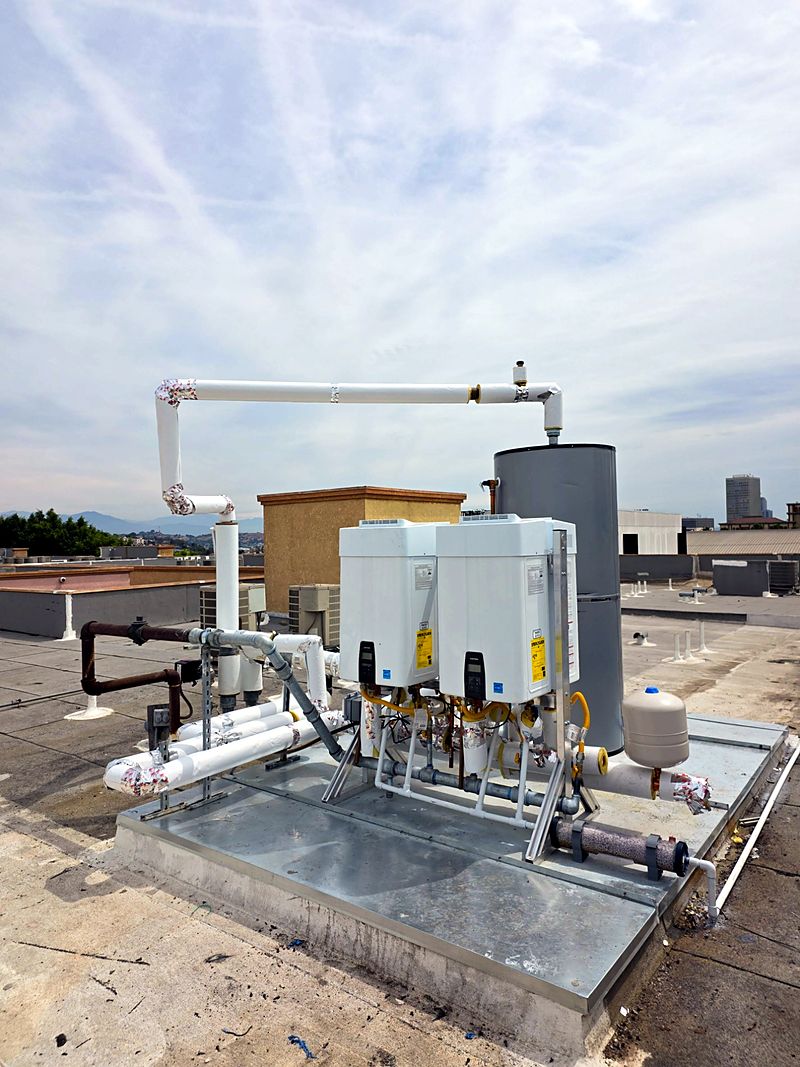
The solar connection
Water heating is a genuinely large share of household energy. Moving it to a heat-pump unit turns it into an electrical load you can schedule — and under NEM 3.0, a load you can shift into your solar production window is worth far more than energy you export. It is one of the simplest ways to raise self-consumption without buying more battery.
Questions we get asked
Tankless or heat pump — which should I choose?
A tankless gas unit gives unlimited hot water in a small footprint and suits households that run out of hot water. A heat-pump water heater is dramatically more efficient than any other electric option, removes gas from that appliance, and can be offset by solar — but it needs a suitable location with adequate air volume and an electrical circuit. The right answer depends on your fuel situation, your space and whether you have solar.
Is a heat-pump water heater noisy?
It makes a sound similar to a quiet refrigerator, because it is essentially moving heat the same way. In a garage or utility space this is a non-issue. Directly outside a bedroom wall it is worth thinking about, which is part of why location assessment matters.
How long does replacement take?
A like-for-like replacement is usually a same-day job. Converting from a gas tank to a heat-pump unit, or from a tank to tankless, adds work — electrical circuit, venting, gas line sizing or condensate drainage depending on direction — and is typically still one day.
Do you handle permits?
Yes. Water heater replacement requires a permit in most jurisdictions, including seismic strapping and correct venting, and inspectors do check. We pull it. An unpermitted install is a problem that surfaces when you sell the house.
Let’s find out what your building can actually do.
Send twelve months of utility data — or one recent bill — and we will come back with a straight answer, including ‘not yet’ if that is the honest one.